
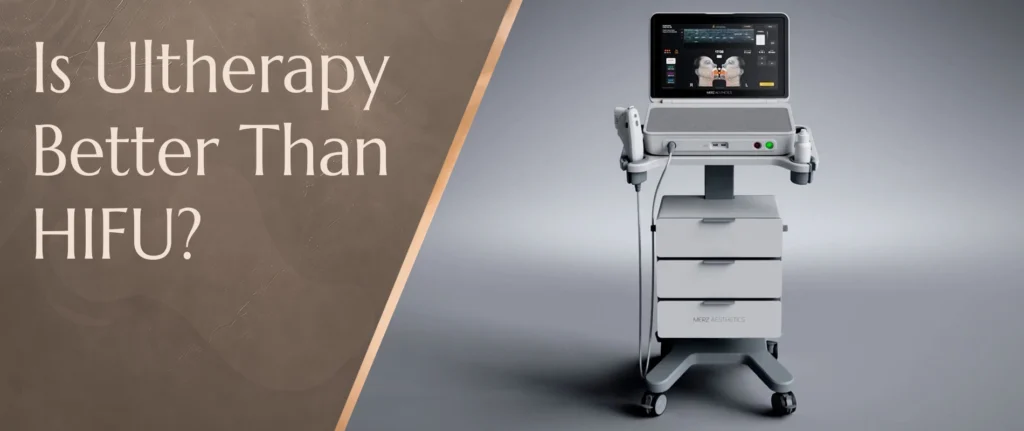
إذا كنت تقارن Ultherapy vs HIFU, both treatments offer a non-surgical approach to lifting and tightening skin through focused ultrasound energy. However, they are not interchangeable names for one identical device. شد البشرة بتقنية أولثيرابي is a branded microfocused ultrasound treatment that includes real-time tissue visualization, while HIFU technology describes a wider category of focused-ultrasound devices with features that vary by manufacturer. Both approaches can stimulate إنتاج الكولاجين، يحسن ارتخاء الجلد, and support gradual facial rejuvenation. The better choice depends on your facial anatomy, degree of laxity, treatment goals, device quality, and professional assessment.
What Is Ultherapy?
الالثيرا هو non-invasive skin tightening treatment that delivers microfocused ultrasound energy beneath the skin to stimulate collagen regeneration. It is commonly considered for patients who want gradual lifting around areas such as the brow, jawline, under the chin, and neck without surgery. The treatment does not add facial volume or remove surface skin; instead, it works within targeted tissue layers to encourage a regenerative response. Reveal Clinics offers Ultherapy treatment in Riyadh as an option for patients seeking skin lifting, improved firmness, and more defined facial contours.
How Does Ultherapy Work?
During شد البشرة بتقنية أولثيرابي, focused ultrasound energy creates controlled thermal points beneath the skin while leaving the surface largely unaffected. This thermal response encourages the body to produce and reorganize الكولاجين والإيلاستين, proteins that contribute to firmness and elasticity. Because collagen remodeling takes time, improvement develops progressively rather than producing the instant effect of surgical lifting. Ultherapy can deliver treatment at selected tissue depths according to the treatment area and individual anatomy. The goal is a gradual, natural-looking lift rather than a dramatic change in facial features.
What Is DeepSEE Imaging in Ultherapy?
A major feature of الالثيرا is real-time ultrasound imaging, often associated with its DeepSEE visualization technology. This allows the practitioner to visualize tissue layers during treatment and assess where ultrasound energy is being delivered. The technology can therefore support treatment precision and individualized energy placement according to a patient’s anatomy. Ultherapy’s official information describes real-time visualization as a defining element of the system and reports FDA-cleared indications including lifting the brow, neck, and under-chin skin and improving lines and wrinkles on the décolletage.
What Is HIFU?
HIFU، أو high intensity focused ultrasound for skin tightening, refers to a broader category of devices that use focused ultrasound energy for non-invasive tissue treatment. In aesthetics, these systems may be used to improve تماسك البشرة, facial definition, and mild to moderate laxity by stimulating a controlled thermal response beneath the surface. Different HIFU machines can have different cartridges, treatment depths, energy settings, regulatory clearances, and clinical protocols. This means that evaluating HIFU ultrasound skin tightening requires looking at the specific device and provider rather than treating every HIFU platform as identical.
How Does HIFU Work?
HIFU technology concentrates ultrasound energy at selected depths beneath the skin, creating small thermal zones that trigger the body’s healing and remodeling process. This response can stimulate new collagen formation and gradually improve skin tightening and lifting. Depending on the machine, different cartridges may target superficial dermal layers or deeper structural tissue. Because devices vary considerably, treatment intensity, comfort, number of sessions, and expected outcomes can also differ. A clinical assessment is therefore important before determining whether a particular HIFU treatment suits the patient’s skin and facial structure.
Is HIFU the Same as Ultherapy?
Ultherapy and HIFU share the use of focused ultrasound energy, but Ultherapy vs HIFU is more accurately understood as a comparison between a specific branded ultrasound platform and a wider device category. Ultherapy uses microfocused ultrasound with visualization, while many HIFU platforms deliver ultrasound energy without the same real-time imaging system. The exact capabilities of HIFU depend on the machine being discussed. Therefore, broad statements about HIFU vs Ultherapy can be misleading unless the comparison identifies the actual HIFU device, treatment protocol, and practitioner experience.
Ultherapy vs HIFU Comparison
A side-by-side comparison makes the practical distinctions easier to understand. Importantly, HIFU characteristics can vary between individual machines, so the HIFU column describes common features rather than every device on the market.
| عنصر المقارنة | الالثيرا | HIFU |
|---|---|---|
التكنولوجيا |
الموجات فوق الصوتية المركزة بدقة |
Focused ultrasound technology varies by device |
Real-Time Imaging |
نعم |
Not available on many platforms |
الهدف الرئيسي |
Skin lifting and tightening |
Skin tightening and collagen stimulation |
تحفيز الكولاجين |
نعم |
نعم |
Treatment Depth |
Selected tissue depths |
Depends on cartridges and device |
Treatment Precision |
Guided by ultrasound visualization |
Depends on device and practitioner technique |
Treatment Areas |
Brow, under chin, neck and other cleared areas |
Depends on device and treatment protocol |
نتائج |
Gradual |
Gradual |
التوقف |
عادةً ما تكون محدودة |
عادةً ما تكون محدودة |
Number of Sessions |
Often individualized |
Varies by platform and patient |
Comfort |
Sensation varies by area and patient |
Sensation varies by device and patient |
Best Candidate |
Selected patients with skin laxity seeking a non-surgical lift |
Depends on device, anatomy and treatment goals |
What Are the Main Differences Between Ultherapy and HIFU?
The most important difference in Ultherapy vs HIFU is not simply ultrasound versus ultrasound. Ultherapy combines microfocused ultrasound energy with real-time tissue visualization, while the features of HIFU machines differ across manufacturers. Device calibration, energy delivery, available depths, imaging capability, clinical evidence, and operator training can therefore affect the treatment experience. Ultherapy also has defined FDA-cleared indications and an established body of clinical use. Choosing between them should focus on the specific patient’s anatomy and the actual device being offered rather than marketing terminology alone.
How Do Ultherapy and HIFU Tighten and Lift the Skin?
Both approaches use focused ultrasound energy to create a controlled thermal response below the skin surface. That response activates biological repair processes involved in إعادة تشكيل الكولاجين and tissue firmness. Neither treatment produces the same mechanical lifting effect as surgery, and changes tend to develop progressively as new collagen forms. For suitable patients, the goal is generally a firmer jawline, improved skin support, or subtle lifting rather than a completely altered facial shape. Results depend on baseline laxity, age-related changes, tissue characteristics, energy delivery, and individual healing response.
How Do They Stimulate Collagen Production?
Ultrasound energy creates controlled heat at targeted tissue points, initiating a healing response that promotes إنتاج الكولاجين and remodeling. Existing collagen fibers may contract while new collagen develops gradually over the following weeks and months. This process explains why علاجات تجديد البشرة based on ultrasound do not usually create their final result immediately. The skin instead becomes progressively firmer as remodeling continues. Maintaining realistic expectations is important because neither ulthera HIFU nor other focused ultrasound procedures stop the natural aging process.
Which Areas Can Ultherapy and HIFU Treat?
Ultherapy is particularly associated with treatment of the brow, under-chin region, neck, and décolletage according to its cleared indications. HIFU treatment areas vary according to the individual device and its intended use. In aesthetic practice, focused ultrasound is commonly considered for the lower face, jawline, neck, and other areas affected by laxity when appropriate. Patients who want a broader approach to facial rejuvenation can also explore Reveal Clinics’ Advanced Non-Invasive Facelift in Riyadh, where treatment selection can address lifting, contouring, and firmness according to individual concerns.
Ultherapy vs HIFU Results
نتائج من HIFU vs Ultherapy are typically gradual because both depend on the body’s collagen response rather than instant structural alteration. Some patients may notice early firmness, but more meaningful changes generally become apparent as collagen remodeling progresses. The degree of improvement varies according to age, skin quality, facial anatomy, severity of laxity, device settings, and treatment technique. Neither procedure should be presented as a replacement for surgery in patients with advanced tissue descent. The objective is usually subtle, progressive شد الجلد with natural facial movement preserved.
متى يمكنك رؤية النتائج؟
Patients should expect progressive rather than immediate results from ultrasound-based tightening. Collagen production and tissue remodeling take time, so the appearance can continue changing over several weeks or months after treatment. Ultherapy’s manufacturer describes results as developing over time and potentially lasting a year or more in suitable patients. The timeline for HIFU depends more heavily on the specific platform and protocol used. A provider should explain the expected timeline before treatment rather than promise a fixed result for everyone.
How Long Do Ultherapy and HIFU Results Last?
Result longevity varies because the skin continues to age after any شد الجلد غير الجراحي treatment. Ultherapy results may remain visible for a year or more in suitable patients, although individual response varies. For HIFU, duration depends on the device, delivered energy, treatment area, age, baseline laxity, and maintenance strategy. Good skincare and sun protection support overall skin health, but they cannot permanently preserve a lifting result. Follow-up treatments may eventually be considered based on clinical assessment.
Is Ultherapy Safer Than HIFU?
It is more accurate to evaluate safety by the specific device, practitioner, protocol, and patient than to say that every Ultherapy treatment is safer than every HIFU treatment. Ultherapy does provide real-time ultrasound imaging, which enables tissue visualization during energy delivery and is an important technical distinction. HIFU devices vary considerably, so safety features and clinical evidence should be assessed individually. A qualified practitioner should examine skin thickness, facial anatomy, medical history, previous procedures, and treatment areas before proceeding. Correct patient selection remains fundamental with either approach.
ما هي الآثار الجانبية الشائعة؟
Temporary redness, swelling, tenderness, tingling, or discomfort can occur after ultrasound skin-tightening procedures. Ultherapy’s official safety information lists redness, swelling, pain, and transient nerve effects among side effects reported in clinical trials. Side effects associated with other HIFU treatments depend on the individual platform, settings, treatment location, and practitioner technique. Patients should receive clear information about expected reactions and uncommon complications before treatment and should follow the provider’s aftercare recommendations.
Why Do Device Quality and Provider Experience Matter?
Device quality و provider experience influence treatment planning, energy placement, comfort, and patient selection. A reputable clinic should be able to identify the device being used, explain how treatment depths are selected, discuss realistic results, and assess whether ultrasound tightening is appropriate for the patient’s anatomy. More energy does not automatically produce a better result, and unnecessary treatment can increase risk. For some patients, another modality may be more suitable. Reveal Clinics also offers Secret RF microneedling for collagen remodeling, firmness, texture, and selected skin-laxity concerns.
Does Ultherapy or HIFU Hurt More?
Comfort cannot be predicted solely from the name Ultherapy or HIFU. Sensation varies with energy settings, treatment depth, facial area, individual pain sensitivity, and the specific HIFU device involved. Patients may describe brief heat, pressure, tingling, or deeper tenderness as energy is delivered. Modern protocols may include measures intended to improve comfort when appropriate. Instead of selecting treatment only according to which one is described online as less painful, patients should discuss comfort expectations and available pain-management strategies during their consultation.
من هو المرشح المناسب لعلاج "أولثيرابي" (Ultherapy)؟
Ultherapy may suit adults with ارتخاء الجلد بدرجة خفيفة إلى متوسطة who want gradual lifting without surgery and have realistic expectations about the degree of improvement possible. Concerns may include a softer jawline, early neck laxity, under-chin looseness, or brow descent. Adequate tissue assessment is important because facial anatomy and skin quality vary significantly between individuals. Patients seeking major correction of advanced sagging may require a different approach. Pregnancy, medical conditions, implants, previous procedures, or active skin problems should also be discussed before treatment.
Who Is a Good Candidate for HIFU?
A suitable HIFU candidate depends partly on the particular device being offered. In general, focused ultrasound may be considered for patients with early or moderate ارتخاء الجلد who want a non-invasive treatment with limited recovery. Facial anatomy, skin thickness, fat distribution, treatment location, and desired degree of lifting should be assessed first. Patients should also understand that HIFU technology encompasses different devices, so expected outcomes cannot be generalized from another person’s experience with a different machine. Professional consultation helps establish whether the chosen platform is appropriate.
Which Is Better for Skin Tightening Ultherapy or HIFU?
There is no universal winner in Ultherapy vs HIFU for every patient. Ultherapy offers a standardized branded platform with real-time visualization and established indications, which may be valuable when precise visualization is a treatment priority. A high-quality HIFU platform can also provide ultrasound-based collagen stimulation and tightening in appropriately selected patients. The decision should account for anatomy, laxity, device quality, treatment area, expected outcome, budget, and practitioner expertise. The strongest answer to is Ultherapy better than HIFU is therefore patient-specific rather than absolute.
Which Is Better for Skin Tightening Ultherapy or HIFU?
There is no universal winner in Ultherapy vs HIFU for every patient. Ultherapy offers a standardized branded platform with real-time visualization and established indications, which may be valuable when precise visualization is a treatment priority. A high-quality HIFU platform can also provide ultrasound-based collagen stimulation and tightening in appropriately selected patients. The decision should account for anatomy, laxity, device quality, treatment area, expected outcome, budget, and practitioner expertise. The strongest answer to is Ultherapy better than HIFU is therefore patient-specific rather than absolute.
Which Is Better for the Face and Neck?
For facial and neck laxity, treatment selection depends on which structures need support and how much laxity is present. Ultherapy is specifically used for non-invasive lifting in areas including the neck and under the chin, with visualization allowing the practitioner to see tissue during treatment. Some HIFU devices also treat the face and neck, but their capabilities differ. Patients should avoid choosing based solely on a device name and instead have the face, jawline, neck, skin thickness, and underlying tissue assessed first.
Which Is Better for Mild to Moderate Skin Laxity?
Both ultrasound approaches may be considered when ارتخاء الجلد بدرجة خفيفة إلى متوسطة is the primary concern and surgery is not desired. The appropriate choice depends on the location of laxity, facial structure, skin quality, comfort preferences, and what the specific device can safely deliver. Ultrasound is also not the only option for firmness. Reveal Clinics provides شد البشرة بتقنية XERF في الرياض, an RF-based treatment designed to support collagen remodeling and improve firmness with minimal downtime.
How Do You Choose Between Ultherapy and HIFU?
Start by identifying the concern rather than choosing a technology first. A consultation should assess skin laxity, facial anatomy, fat distribution, skin quality, jawline definition, neck changes, and your expectations. Ask which exact device will be used, what areas will be treated, how treatment depth is determined, what downtime to expect, and how results will be evaluated. Cost matters, but it should not replace considerations such as provider qualifications, device quality, realistic results, and safety. Personalized treatment planning is more useful than relying on generic HIFU vs Ultherapy claims online.
When May Ultherapy Be the Better Choice?
Ultherapy may be particularly relevant for patients who want microfocused ultrasound with real-time visualization, defined treatment protocols, and a non-surgical lifting approach for suitable facial or neck concerns. It can also appeal to patients who value an established branded system with specific regulatory indications and clinical evidence. Treatment should still be chosen only after evaluating individual anatomy and laxity. Real-time imaging is a meaningful technical advantage, but it does not mean every patient automatically needs Ultherapy or that the procedure can reproduce surgical facelift results.
When May HIFU Be the Better Choice?
A specific HIFU treatment may be appropriate when its device characteristics, available depths, treatment protocol, and expected results match the patient’s needs. Some people may prioritize accessibility, comfort, maintenance treatment, or a different energy-delivery approach. Because HIFU represents many different platforms, however, patients should ask which machine the clinic uses rather than choosing a treatment based on the word HIFU alone. The practitioner should explain why that particular platform is suitable for the patient’s concern and what realistic improvement it may provide.
Why Consider Ultherapy in Riyadh?
Patients seeking علاج "الثيرا" (Ultherapy) في الرياض may prefer a treatment that provides non-invasive lifting while fitting into a lifestyle where lengthy surgical recovery is undesirable. Reveal Clinics offers Ultherapy for skin tightening and facial contour improvement and provides consultant-led aesthetic care in Riyadh. A professional consultation also allows other contributing concerns, such as skin texture or reduced firmness, to be assessed instead of assuming every sign of aging requires ultrasound treatment. A personalized plan can therefore focus on balanced, تجديد شباب الوجه بمظهر طبيعي.
Why Consider Dr. Marwan Al-Haddad for Personalized Skin Tightening Treatment in Riyadh?
الدكتور مروان الحداد is a Consultant in Dermatology, Cosmetic and Dermatologic Surgery and a Laser Specialist at Reveal Clinics in Riyadh, with Reveal also listing him as a Faculty Member at Mount Sinai School of Medicine in New York. الالثيرا may be recommended for suitable patients seeking ultrasound-based lifting and collagen stimulation. جهاز السيكرت مايكرونيدلينغ can address skin firmness, texture, and collagen remodeling, while زيرف is designed for non-surgical radiofrequency tightening. An الترافورمر may be considered when broader lifting and contouring concerns are present. الدكتور مروان الحداد will recommend the most suitable treatment based on the patient’s facial features, skin condition, concerns, and individual treatment needs, rather than relying on a standard protocol for every patient.
Frequently Asked Questions About Ultherapy vs HIFU
Is Ultherapy Better Than HIFU for Skin Tightening?
Ultherapy may offer advantages in real-time imaging and standardized treatment delivery, while HIFU outcomes vary by device. The better option depends on your skin laxity, anatomy, goals, and provider assessment.
How Long Does Ultherapy Last Compared With HIFU?
Ultherapy results may remain visible for a year or more in suitable patients, while HIFU longevity varies according to the specific device and protocol. Individual aging, skin quality, and maintenance also affect duration.
How Many Ultherapy or HIFU Sessions Are Needed?
The number of sessions depends on the technology, severity of laxity, and individual response. Ultherapy is often planned as a single treatment with later reassessment, while some HIFU protocols may use different schedules.
Does Ultherapy or HIFU Have Less Downtime?
Both are generally considered non-invasive skin tightening treatments with limited visible downtime. Temporary redness, swelling, tenderness, or sensitivity may occur, and recovery can vary by patient and treatment settings.
Can Ultherapy and HIFU Be Combined?
Using both is not automatically necessary simply because they use related ultrasound principles. A dermatologist should determine whether combining or sequencing treatments offers a meaningful benefit or whether one appropriately selected procedure is sufficient.
خاتمة
اذا is Ultherapy better than HIFU? Ultherapy distinguishes itself through microfocused ultrasound, real-time visualization, defined indications, and an established clinical evidence base, while HIFU represents a broader group of ultrasound devices whose capabilities vary. Both can support collagen stimulation, skin tightening, and gradual facial rejuvenation when used appropriately. The best choice depends less on choosing a winner and more on matching the treatment to your facial anatomy, skin laxity, expectations, and clinical needs. At Reveal Clinics in Riyadh, a personalized assessment can help determine which skin rejuvenation treatment is most appropriate for achieving balanced and natural-looking results.