
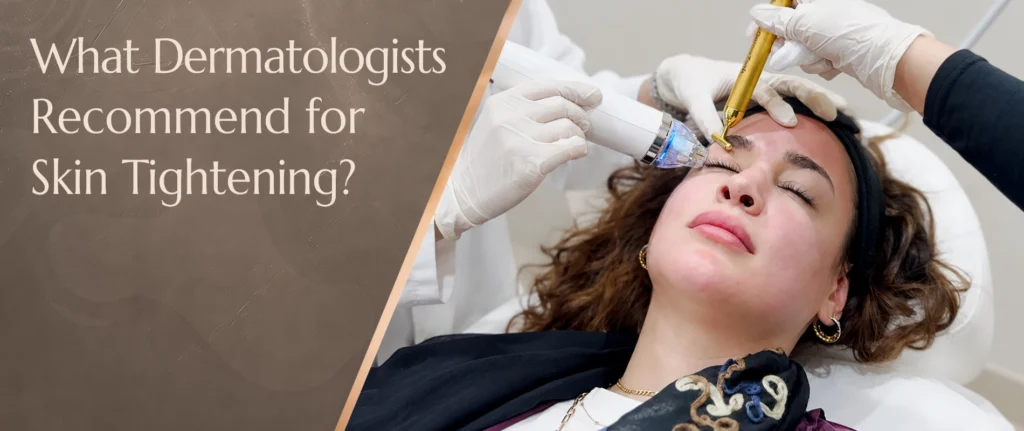
People searching for the best treatment for skin tightening often find many devices, procedures, and conflicting recommendations. The right choice depends on why the skin has become loose, how advanced the ارتخاء الجلد is, and which areas need treatment. Dermatologists may consider شد الجلد بموجات الراديو, focused ultrasound, RF microneedling, laser resurfacing, injectables, or surgery depending on the concern. Modern non-surgical skin tightening procedures can support collagen remodeling and create gradual, natural-looking improvement. They cannot, however, remove significant excess skin in the same way surgery can. A professional assessment helps match the treatment depth and technology to your individual skin.
What Causes Skin to Lose Firmness?
Loss of firmness usually develops through a combination of collagen decline, elastin changes, sun damage, volume loss, genetics, and lifestyle factors. As these structural changes progress, the cheeks, jawline, neck, arms, or abdomen may begin to appear looser. Understanding the cause is important because the most effective skin laxity treatment depends on whether the problem involves skin, fat, facial volume, texture, or several factors together.
Natural Loss of Collagen and Elastin
Collagen and elastin help give skin strength, resilience, and flexibility. Their production and organization change with age, making skin thinner and less able to maintain firm contours. Collagen stimulation is therefore a central goal of many professional skin firming treatments.
Sun Exposure and Photoaging
متكرر التعرض للأشعة فوق البنفسجية damages structural proteins and contributes to premature الشيخوخة الضوئية. Over time, sun damage can increase wrinkles, uneven texture, and loss of elasticity. Daily sun protection is particularly important in Riyadh when maintaining healthier-looking skin.
Weight Loss and Changes in Skin Volume
Significant weight loss can leave skin with less underlying support, particularly around the face, abdomen, and arms. Energy-based treatments to tighten skin may help mild laxity, but substantial excess skin may require a surgical assessment.
Pregnancy and Major Body Changes
Pregnancy and major body changes stretch the skin and underlying tissues, particularly around the abdomen. The degree of recovery varies according to genetics, age, skin elasticity, and the amount of stretching that occurred.
Genetics, Lifestyle, and the Aging Process
Genetics influence collagen quality, facial structure, and how quickly visible aging develops. Smoking, repeated sun exposure, large weight fluctuations, poor sleep, and other lifestyle factors may also contribute to reduced skin quality and firmness.
What Do Dermatologists Recommend for Skin Tightening?
Dermatologists usually recommend treatment only after determining what is actually causing the appearance of sagging. Dermatologist skin tightening may involve energy-based treatments for collagen stimulation, injectables for volume loss, resurfacing for texture, or surgical referral when excess skin is substantial. The best non-surgical skin tightening option therefore differs between patients rather than following one universal device or protocol.
How Dermatologists Assess Skin Laxity
A skin-tightening consultation evaluates مرونة الجلد, thickness, facial anatomy, degree of laxity, volume loss, texture, previous treatments, and medical history. The dermatologist also considers which tissue depth needs treatment and whether the patient’s expectations can realistically be achieved without surgery.
Why Treatment Recommendations Differ Between Patients
Two people with similar-looking sagging may have completely different underlying causes. One may primarily have فقدان الكولاجين, while another may have facial fat loss or significant excess skin. Personalized assessment helps prevent inappropriate or unnecessary skin tightening procedures.
Non-Surgical and Surgical Treatment Options
Mild to moderate laxity may respond to non-invasive skin tightening procedures, RF microneedling, or other energy-based options. More pronounced sagging may require surgical consultation because non-surgical treatments stimulate tissue remodeling rather than physically removing excess skin.
Non-Surgical Skin Tightening Treatments
حديث non-surgical skin tightening procedures use controlled energy to create thermal or micro-injury responses that stimulate collagen. Reveal Clinics offers several الأجهزة القائمة على الطاقة that can address different depths and skin concerns. Choosing among them depends on laxity severity, anatomy, texture, downtime preference, and treatment goals.
شد الجلد بالموجات فوق الصوتية
Focused ultrasound delivers energy at selected depths beneath the skin, creating controlled thermal stimulation that supports إعادة تشكيل الكولاجين. الالثيرا may be considered for suitable patients with mild to moderate facial, jawline, under-chin, or neck laxity.
شد الجلد باستخدام الترددات الراديوية
شد الجلد باستخدام الترددات الراديوية uses controlled electrical energy to heat tissue and stimulate collagen-producing cells. Different RF systems vary in energy delivery and depth, so the term describes a treatment category rather than one identical procedure.
XERF Dual-Frequency Radiofrequency
شد البشرة بتقنية XERF في الرياض uses radiofrequency technology designed to heat tissue at different depths while supporting progressive شد البشرة. It may suit patients looking to tighten face skin without surgical incisions or microneedles.
الوخز الدقيق
جهاز السيكرت مايكرونيدلينغ combines microneedling with radiofrequency energy to stimulate .إنتاج الكولاجين والإيلاستين.. It can be particularly useful when mild laxity appears together with enlarged pores, fine lines, acne scars, or uneven skin texture.
Non-Ablative Laser Skin Tightening
Non-ablative fractional lasers deliver controlled thermal energy without fully removing the skin surface. Technologies such as فراكسل can support collagen remodeling while also addressing concerns such as texture, fine lines, and photodamage.
إعادة تسطح الجلد بالليزر
Laser resurfacing may be considered when laxity appears alongside deeper wrinkles, scarring, or significant texture concerns. فراكشنال ليزر creates controlled microscopic treatment zones that stimulate skin renewal and collagen regeneration, but generally involves more recovery than non-invasive tightening treatments.
Injectables That Improve the Appearance of Firmness
Injectables do not tighten skin through the same mechanism as ultrasound or radiofrequency, but they can improve the appearance of facial support when volume loss contributes to sagging. A dermatologist may combine structural correction with facial tightening when several components of aging are present. The goal should be balanced restoration rather than simply adding volume wherever the skin appears loose.
Dermal Fillers for Lost Facial Volume
Dermal fillers can restore selected areas of lost volume and improve facial proportions when deflation contributes to a sagging appearance. They do not remove loose skin or replace true skin firming procedures, so suitability depends on the cause of the patient’s concern.
أي علاج لشد البشرة هو الأنسب لك؟
Dermal fillers can restore selected areas of lost volume and improve facial proportions when deflation contributes to a sagging appearance. They do not remove loose skin or replace true skin firming procedures, so suitability depends on the cause of the patient’s concern.
Treatment for Mild Facial Laxity
Early laxity may respond well to non-invasive skin tightening procedures that encourage gradual collagen renewal. RF or focused ultrasound may be considered when the goal is subtle improvement in firmness without surgery.
Treatment for Jawline and Under-Chin Sagging
A softer jawline may result from skin laxity, fat, volume changes, or several factors together. Focused ultrasound or RF may support jawline tightening, but correct diagnosis determines which approach is most appropriate.
Treatment for Neck Laxity
The neck is a common area for age-related loss of elasticity. Ultrasound, radiofrequency, or selected RF microneedling treatments may help mild to moderate laxity, while advanced sagging may require different options.
Treatment for Loose Skin on the Arms or Abdomen
Skin tightening procedures for the body may be considered when mild laxity affects areas such as the upper arms or abdomen. The degree of excess tissue and whether localized fat is also present influence treatment selection.
Treatment for Wrinkles and Uneven Texture
When wrinkles and rough texture accompany laxity, RF microneedling or fractional laser treatment may provide broader remodeling than a tightening-only approach. These technologies target both skin quality and collagen renewal.
Treatment for Volume Loss
When reduced facial volume causes the appearance of sagging, energy-based tightening alone may not solve the problem. Carefully selected injectables or other restorative treatments may be discussed after facial assessment.
What Non-Surgical Treatments Can Achieve
Professional skin tightening treatments can improve mild to moderate laxity, firmness, contour, and skin quality in suitable patients. They usually create gradual changes and should not be expected to reproduce the degree of correction achieved by a surgical facelift.
How Long Do Skin Tightening Results Last?
طول عمر علاجات شد الجلد varies because each technology produces a different biological response and natural aging continues after treatment. Some improvements may remain noticeable for an extended period, while others gradually soften as collagen declines. The patient’s age, degree of laxity, sun exposure, lifestyle, treatment type, and maintenance plan all influence how long tighter skin remains noticeable.
Factors That Affect Treatment Longevity
Results are influenced by collagen quality, genetics, treatment depth, skin health, weight stability, UV exposure, smoking, and the specific skin laxity treatment performed. A dermatologist can discuss expected durability once the treatment and target area have been selected.
Age and Collagen Production
Older skin generally produces and reorganizes collagen differently from younger skin. Age alone does not determine success, but it can influence the speed and degree of إعادة تشكيل الكولاجين.
Sun Exposure in Riyadh
Frequent ultraviolet exposure contributes to collagen breakdown and premature aging. Consistent broad-spectrum sunscreen, shade, and sensible sun protection help support skin health after skin firming treatments.
Smoking and Lifestyle Habits
Smoking and other habits that negatively affect skin health may accelerate visible aging. Healthy routines cannot stop aging, but they can support the quality of the skin surrounding a treatment result.
Weight Stability and Skin Quality
Large weight fluctuations can repeatedly stretch facial and body tissues. Maintaining a relatively stable weight can help preserve the contours achieved through procedures that tighten skin.
Maintenance Treatments and Skincare
Some patients may benefit from maintenance treatments as laxity gradually returns. A consistent skincare routine, including sun protection and dermatologist-recommended products, can support overall skin quality between procedures.
What to Expect During a Skin Tightening Consultation
A consultation for dermatologist skin tightening should begin with evaluation rather than choosing a device in advance. Your dermatologist will examine laxity, elasticity, texture, facial volume, treatment areas, medical history, previous procedures, and realistic goals. This assessment helps determine whether RF, ultrasound, RF microneedling, resurfacing, injectables, an Advanced Non-Invasive Facelift in Riyadh, or another approach is most appropriate.
Expected Results, Risks, and Maintenance
Before treatment, your dermatologist should explain what degree of improvement is realistic, when results may appear, possible side effects, expected recovery, and whether maintenance may eventually be needed. Informed treatment planning is important because different skin firming procedures have different risk and recovery profiles.
Dr. Haitham Al-Gzlan: Assessing Skin Laxity
الدكتور هيثم القزلان, Consultant in الأمراض الجلدية والليزر وحقن التجميل at Reveal Clinics, considers the underlying cause of reduced skin firmness when evaluating skin-tightening concerns. ارتخاء الجلد can vary from mild to moderate, and it may occur alongside changes in ملمس البشرة, مرونة الجلد، أو حجم الوجه. These factors can influence which علاجات شد الجلد أو non-surgical skin tightening procedures may be appropriate for the individual patient.
A dermatological assessment may therefore consider the degree of skin laxity, جودة البشرة, تشريح الوجه, منطقة العلاج, previous proceduresو individual treatment goals. Depending on these findings, approaches such as شد الجلد بموجات الراديو, شد الجلد بالموجات فوق الصوتية, الوخز بالإبر الدقيقة بترددات الراديو، أو غير ذلك skin rejuvenation procedures may be discussed as part of a personalized treatment plan.
Dr. Saud Al-Obaida: Understanding the Cause of Reduced Firmness
الدكتور سعود العبيداء, Consultant in الأمراض الجلدية والليزر وحقن التجميل at Reveal Clinics, evaluates skin-firmness concerns within the broader context of facial ageing. Reduced firmness is not always caused by ارتخاء الجلد alone; فقدان حجم الوجه, changes in جودة البشرة, and differences in facial structure can also affect how the face appears and how a patient may respond to treatment.
Understanding these differences is important when considering علاجات شد الجلد or other facial tightening procedures. A dermatologist may assess the نوع البشرة, degree and location of laxity, facial structure, previous treatments, and the patient’s aesthetic goals before discussing suitable non-invasive skin tightening procedures, collagen-stimulating technologies, or other treatment categories.
Dr. Marwan Al-Haddad: Evaluating the Degree of Skin Laxity
الدكتور مروان الحداد, Consultant in Dermatology, Cosmetic & Dermatologic Surgery and Laser at Reveal Clinics, considers the extent and characteristics of ارتخاء الجلد when evaluating facial ageing concerns. Mild to moderate skin laxity may be approached differently from more advanced ترهل الجلد، في حين أن منطقة العلاج, tissue quality, and facial anatomy can also influence which skin tightening procedures may be considered.
An assessment may include the location and severity of laxity, جودة البشرة, تشريح الوجه, previous proceduresو expected treatment outcomes. For suitable patients, شد الجلد غير الجراحي, collagen stimulation treatments، أو غير ذلك professional skin tightening treatments may be considered, while more advanced structural changes may require discussion of alternative treatment options.
How to Maintain Skin Tightening Results in Riyadh
الحفاظ على skin tightening results involves protecting the skin from avoidable sources of collagen damage while allowing normal aging to continue naturally. Daily sun protection is especially important in Riyadh, along with appropriate moisturization, a consistent skincare routine, avoiding smoking, and maintaining stable body weight. Follow-up appointments can help determine whether another session or a different treatment is needed as the skin changes over time.
Are Skin Tightening Treatments Safe?
تتخذ العديد من التدابير المهنية للتحفيز أو إعادة التشكيل. علاجات شد الجلد are generally planned around the patient’s skin type, medical history, anatomy, and the technology being used. Temporary redness, swelling, tenderness, heat, or sensitivity may occur with some procedures, while resurfacing and microneedling treatments can involve more recovery. Risks vary considerably between technologies, so patients should receive individualized safety information before treatment. Choosing trained medical providers and appropriate energy settings helps reduce avoidable complications.
Book a Skin Tightening Consultation at Reveal Clinics in Riyadh
A dermatologist-led consultation can help identify whether your concern is primarily ارتخاء الجلد, volume loss, wrinkles, poor texture, or a combination of these changes. Reveal Clinics offers several professional skin tightening treatments with different mechanisms and treatment depths, allowing the plan to be matched to the patient’s skin and facial anatomy. A personalized approach helps set realistic expectations and avoids choosing a procedure simply because it is currently popular.
Frequently Asked Questions About Dermatologist-Recommended Skin Tightening
What Is the Best Skin Tightening Treatment?
ال best treatment for skin tightening depends on your anatomy, laxity severity, skin quality, and goals. Ultrasound, radiofrequency, RF microneedling, and laser technologies each address different treatment needs.
What Tightens Skin the Most Without Surgery?
لا يوجد واحد best non-surgical skin tightening treatment for everyone. The most suitable option depends on tissue depth, treatment area, skin condition, and how much correction is realistically required.
Can Skin Tightening Creams Remove Sagging Skin?
Creams can moisturize the skin and selected ingredients may support surface skin quality, but topical products cannot physically remove significant sagging. Professional treatment may be needed when structural laxity is present.
Is Ultherapy Better Than Radiofrequency?
لا يوجد خيار أفضل بشكل مطلق. الالثيرا uses focused ultrasound, while RF devices use radiofrequency heating, so treatment selection depends on anatomy, laxity, desired depth, and patient preference.
How Many Skin Tightening Sessions Are Needed?
The number of sessions varies by technology and individual response. Some treatments may be planned as a single session with later maintenance, while others commonly involve a treatment series.
How Quickly Will Skin Tightening Results Appear?
Some tightening procedures produce early firmness, but collagen-based improvement usually develops gradually. More visible results can continue to appear over the following weeks or months.
How Long Do Non-Surgical Skin Tightening Results Last?
Longevity varies according to treatment, age, collagen response, lifestyle, sun exposure, and natural aging. Maintenance may eventually be considered when the improvement begins to diminish.
Can Skin Tightening Treat Loose Skin After Weight Loss?
Selected خيارات علاج الجلد المترهل may improve mild laxity after weight loss. Significant excess skin may not respond sufficiently to non-surgical technology and can require a surgical consultation.
Is Skin Tightening Suitable for All Skin Types?
Many technologies can be used across different skin types, but suitability depends on the specific device and treatment settings. A dermatologist should assess skin tone, medical history, and pigmentary risk beforehand.
خاتمة
Dermatologists do not recommend one universal cure for sagging skin because every patient’s anatomy, collagen quality, laxity, and goals are different. The best skin firming procedures may include radiofrequency, focused ultrasound, RF microneedling, fractional laser treatment, volume restoration, or a carefully selected combination. Non-surgical options can provide meaningful improvement for mild to moderate laxity, but their limits should be clearly understood. At Reveal Clinics in Riyadh, a dermatologist can assess your skin and determine which علاج شد الجلد offers the most appropriate balance of results, recovery, and long-term maintenance.