
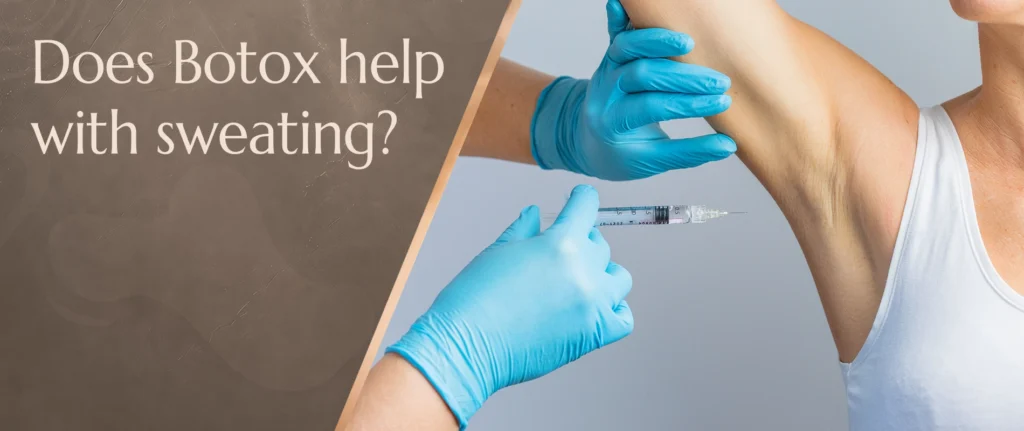
Does Botox Help With Sweating? Yes, Botox can help reduce excessive perspiration, particularly in people with فرط التعرق that remains difficult to control with topical treatment. سم البوتولينوم temporarily blocks nerve signals that activate the الغدد العرقية, reducing perspiration in the injected area without surgically removing the glands. Its strongest established role is in severe فرط التعرق الإبطي الأولي, or excessive underarm sweating, although doctors may also use it for selected cases involving the palms, feet, face, or scalp. Botox does not work by reducing thyroid activity, and it is not a permanent cure for excessive sweating. Patients in Riyadh can discuss injectable treatment through Reveal Clinics’ العناية بالبشرة والجمال care after an appropriate medical assessment.
Understanding Hyperhidrosis and Why It Matters for Patients in Riyadh
فرط التعرق describes sweating that goes beyond what the body normally needs for temperature regulation. In Riyadh, sweating because of high temperatures or exercise is normal, but persistent perspiration that occurs while resting or without an obvious trigger may indicate a medical sweating disorder. The condition can affect clothing, work, social interactions, hand contact, sleep, and confidence. Many people begin searching for البوتوكس لعلاج فرط التعرق after strong antiperspirants fail to provide enough control. Correct diagnosis matters because the treatment should address the type and cause of sweating rather than simply suppressing every symptom.
What Is Primary Versus Secondary Hyperhidrosis?
فرط التعرق الأولي usually causes excessive focal sweating without another identifiable disease and commonly involves the underarms, palms, soles, or face. فرط التعرق الثانوي occurs because of another medical condition, medication, hormonal change, or other underlying factor and may affect larger areas of the body. Sudden, generalized, or unusual sweating therefore deserves proper medical evaluation before Botox injections for excessive sweating are considered. A dermatologist may review when the symptoms began, medication use, family history, nighttime sweating, and other health concerns. Treating an underlying cause may be more important than treating the sweat glands themselves.
Common Areas Affected Including Underarms, Palms, Feet and Face
The underarms are among the most frequently affected areas, but فرط التعرق can also involve the palms, soles, forehead, scalp, and other localized regions. People searching for Botox for sweaty hands أو hand Botox often have palmar sweating that makes writing, using electronic devices, or shaking hands uncomfortable. Patients may also search for Botox for face sweat, Botox and facial sweating، أو Botox on face for sweating when perspiration affects the forehead or scalp. Each treatment area has different anatomical and safety considerations. The location and severity of sweating should therefore guide treatment rather than using one injection protocol everywhere.
How Excessive Sweating Impacts Daily Life and Confidence in KSA
Severe التعرق المفرط can become much more than a physical inconvenience. Constant underarm moisture may cause visible marks on clothing, sweaty palms may interfere with professional or social interactions, and facial sweating can become distracting during daily activities. Persistent moisture can also contribute to odor because bacteria thrive more easily in damp environments. Some patients begin avoiding certain fabrics, colors, meetings, or social situations because they constantly worry about visible perspiration. For suitable candidates, underarm sweat Botox can reduce this daily burden and help patients feel more comfortable without promising complete or permanent dryness.
How Botox Works to Reduce Excessive Sweating
Sweat glands are activated when nerves release a chemical messenger called أستيل كولين. سم البوتولينوم من النمط "أ" temporarily prevents that chemical from being released at targeted nerve endings, so nearby sweat glands receive less stimulation and produce less sweat. This nerve signal → acetylcholine → sweat gland relationship is the key mechanism behind البوتوكس لعلاج فرط التعرق. Botox does not remove sweat glands, damage the thyroid gland, or permanently disable the body’s ability to regulate temperature. The effect is localized to the injected region and gradually fades as nerve communication recovers, which explains why repeat treatment may eventually be required.
FDA and SFDA Status for Axillary Hyperhidrosis
In the United States, BOTOX, or onabotulinumtoxinA, is approved for severe فرط التعرق الإبطي الأولي when topical treatments do not provide adequate control. Botulinum toxin products are also regulated in Saudi Arabia, but approved indications, formulations, and dosing can differ between products. Patients should ask which product is being administered and whether it is appropriate for the intended indication. Products marketed as Botox, Dysport, Xeomin, or other botulinum toxins should not be treated as automatically interchangeable because their units and prescribing instructions differ. Treatment should follow the relevant product information and be performed by a qualified medical professional.
Off-Label Use for Palms, Feet and Facial Sweating
Doctors may also use botulinum toxin for فرط التعرق الراحي, فرط التعرق الأخمصي، أو craniofacial hyperhidrosis, but these applications require more individualized planning. Botox for sweaty hands can reduce perspiration but may occasionally cause temporary weakness because injections are placed close to muscles responsible for grip and fine movement. Feet can be more sensitive during injection, while Botox to stop sweating face requires precise placement to minimize unwanted effects on facial expression. These factors make provider experience especially important outside the underarms. Patients should discuss expected benefits, risks, and alternatives for the specific body area being treated.
Dr. Marwan Al-Haddad May Recommend Botox After Evaluating Hyperhidrosis
الدكتور مروان الحداد is a Consultant in Dermatology, Cosmetic and Dermatologic Surgery, and Laser at Reveal Clinics, and his treatment expertise includes البوتوكس وحشوات الجلد (الفيلر). For someone experiencing excessive sweating, the first step is determining whether symptoms represent primary hyperhidrosis or could be related to another condition. Dr. Marwan can review the affected area, previous treatments, medical history, medications, and patient expectations before deciding whether Botox is appropriate. This approach avoids treating every sweating problem with injections automatically. Patients can also explore Reveal’s العناية بالبشرة والجمال services when discussing an individualized injectable treatment plan.
What to Expect During Botox Treatment for Sweating in Riyadh
أ Botox sweating treatment generally starts with identifying exactly where excessive perspiration occurs and how strongly it affects daily activities. If treatment is suitable, the clinician places multiple small injections just beneath or within the skin across the sweating area rather than giving one large injection. Underarm treatment can usually be performed during an outpatient clinic visit and does not require surgical incisions. Patients often describe the injections as brief pinches or stings, although palms and soles tend to be more sensitive. Cooling, topical anesthetic, or another comfort measure may be considered according to the treatment area and individual sensitivity.
Pre-Treatment Consultation and Medical History Review
Before receiving under arm Botox, patients should tell their doctor about prescription medicines, supplements, previous botulinum toxin injections, allergies, medical conditions, and any infection around the intended injection area. Patients should not independently stop aspirin, anticoagulants, or other medically necessary medicines simply because a Botox appointment is planned. The clinician should determine whether medication changes are appropriate. The consultation also provides an opportunity to identify signs of فرط التعرق الثانوي, particularly when sweating is new, widespread, or accompanied by other symptoms. Good preparation begins with an accurate medical history rather than following generic internet instructions.
Mapping the Treatment Area Using Iodine-Starch Testing
A dermatologist may use Minor’s iodine-starch test to map an area of excessive underarm sweating. Iodine is applied to clean, dry skin and allowed to dry before starch is placed over the area; active sweating produces a darker color that helps outline the hyperhidrotic region. The clinician can then distribute injections more evenly across the areas producing the most perspiration. This technique can be particularly useful when the border between normal and excessive sweating is difficult to see. Not every patient needs the test, so the decision depends on the clinical assessment and treatment plan.
Results Timeline and How Long Botox for Sweating Lasts
Patients usually do not have to wait months to determine whether البوتوكس لعلاج فرط التعرق is working. Improvement may begin within several days, while the fuller sweat-reducing effect commonly develops over the following one to two weeks. Studies and specialist hyperhidrosis guidance report substantial reductions in underarm sweating among responsive patients, but individual results should never be guaranteed. Botox duration for hyperhidrosis also varies from one person to another, although underarm results commonly last several months. The treatment gradually wears off because nerve endings eventually regain their ability to communicate with sweat glands.
Duration of Effect for Underarms Versus Hands and Feet
Botox for armpits often provides several months of reduced sweating, with some patients experiencing longer control than others. Treatment of the palms, soles, scalp, or face should not automatically be expected to last exactly the same amount of time because anatomy, dose, technique, and individual response can differ. Hand Botox, for example, also has different functional considerations because temporary weakness may affect gripping or fine movements. When Botox wears off, sweating usually returns gradually rather than suddenly becoming worse overnight. A dermatologist can use the patient’s previous response to decide whether and when another session is appropriate.
Maintenance Sessions and Repeat Treatment Intervals
Botox is not a hyperhidrosis permanent treatment because it temporarily interrupts nerve signaling rather than permanently destroying nerves or sweat glands. Maintenance treatment can therefore be considered once the previous effect has clearly diminished and excessive sweating begins interfering with daily life again. There is no single repeat interval that suits every patient, so treatment frequency should reflect the body area, symptom return, previous response, and medical assessment. Patients may find it useful to monitor when noticeable moisture returns after each session. Regular review also allows the dermatologist to identify any unexpected change in the sweating pattern.
Benefits Beyond Sweat Reduction Including Odor Control
The principal purpose of Botox injections for sweating armpits is to reduce excessive moisture, but patients may notice additional practical benefits. Less perspiration can mean fewer visible stains on shirts, less frequent clothing changes, and greater comfort during work or social events. Reduced moisture may also make body odor easier to manage because odor-producing bacteria can multiply more easily in a damp environment. However, Botox does not directly kill bacteria and should not be marketed as a deodorant treatment. Normal hygiene remains important, while the main medical objective continues to be reducing excessive sweat production in the treated area.
Does Botox for Sweating Prevent Body Odor?
Botox may indirectly reduce underarm odor when the smell is closely associated with heavy perspiration. Less moisture leaves bacteria with a less favorable environment, which may reduce the intensity of odor for some patients. However, Botox and sweating treatment does not address every possible cause of body odor and does not replace cleansing, deodorant, or medical evaluation when odor is unusual or persistent. Patients should therefore view odor improvement as a possible secondary benefit rather than a guaranteed outcome. This distinction makes the treatment explanation more medically accurate than claiming Botox directly prevents odor.
Safety, Side Effects and Contraindications for Botox Injections
Common short-term effects of Botox injections can include mild tenderness, redness, swelling, bruising, or discomfort at the injection sites. Botox for sweaty hands may occasionally produce temporary hand weakness, while facial injections require careful placement because nearby muscles control expression. Patients with an active infection at the treatment site, previous hypersensitivity to a botulinum toxin product, certain neuromuscular conditions, or relevant medication interactions need additional medical assessment. Rare but serious systemic effects can include swallowing, speaking, or breathing problems and require urgent medical care. Choosing an appropriately qualified injector remains an important part of treatment safety.
How Botox Compares With Other Hyperhidrosis Treatments
Botox is an important treatment for hyperhidrosis, but it is not the only option. Depending on the location and severity of sweating, a dermatologist may consider clinical-strength antiperspirants, prescription topical medicines, iontophoresis for the hands or feet, oral anticholinergic medications, or other medical procedures before or alongside injections. More invasive approaches may be reserved for carefully selected severe cases. The best treatment depends on whether sweating is primary or secondary, which areas are affected, previous treatment response, and tolerance of potential side effects. Botox becomes particularly relevant when conservative treatments have not provided sufficient relief.
Pre and Post-Treatment Care Instructions for Best Results
Before treatment, follow the instructions given specifically by your clinician regarding skincare, shaving, antiperspirant use, medicines, and any planned iodine-starch test. Do not stop prescription blood thinners or other medications without approval from the clinician responsible for prescribing them. After injections, avoid unnecessarily rubbing or aggressively massaging the treated area and follow individualized advice about exercise, heat, deodorant, or skincare products. Recommendations can vary according to the location being treated, so rigid rules found online should not replace professional guidance. Patients using Reveal Clinics’ العناية بالبشرة والجمال services can receive preparation and aftercare instructions tailored to their procedure.
Next Steps Toward Dry, Comfortable Skin at Reveal Clinics Riyadh
If excessive sweating repeatedly affects clothing, work, social interactions, or confidence, the first step should be identifying why it occurs. A dermatologist can distinguish primary hyperhidrosis from sweating caused by medications or an underlying health condition and then discuss suitable treatment choices. Patients considering underarm sweat Botox, hand Botox, or treatment for facial sweating should ask about expected results, duration, possible side effects, and maintenance. Reveal Clinics in Riyadh offers dermatologist-led assessment rather than applying one treatment plan to every patient. A consultation through Reveal’s العناية بالبشرة والجمال care can help determine whether Botox is an appropriate next step.
الأسئلة الشائعة (FAQ)
Does Botox Stop Sweating Completely or Just Reduce It?
Botox aims to reduce excessive sweating rather than guarantee completely dry skin. Improvement varies among patients, and untreated parts of the body continue normal sweating for temperature regulation.
Can Botox Be Used for Facial or Scalp Sweating?
Botox for face sweat and scalp hyperhidrosis may be treated in selected patients, but these areas require precise injection technique. An experienced dermatologist should evaluate facial anatomy, sweating distribution, and possible effects on nearby muscles first.
Is Botox for Sweating Painful?
Most underarm injections cause brief pinching or stinging rather than prolonged pain. Palms and soles tend to be more sensitive, so cooling, numbing cream, or another comfort strategy may be considered.
When Does Botox for Sweating Start Working?
Some patients notice improvement within a few days, while the fuller effect commonly develops within about one to two weeks. Treatment response and timing can vary between individuals and body areas.
How Long Does Botox for Hyperhidrosis Last?
Botox duration for hyperhidrosis commonly extends for several months, particularly in the underarms. Results are temporary, and another session may be considered once excessive sweating gradually returns.
What Happens When Botox Wears Off?
Botox does not permanently destroy the sweat glands. As nerve signaling recovers, perspiration gradually returns toward the patient’s previous pattern rather than creating permanent changes to normal sweating.
Is Botox Safe for Long-Term Hyperhidrosis Treatment?
Repeated botulinum toxin treatment has been used successfully for hyperhidrosis, but ongoing treatment should remain medically supervised. The dermatologist should periodically reassess results, adverse effects, treatment intervals, and any change in symptoms.
خاتمة
اذا does Botox help with sweating? Yes, for appropriately selected patients, حقن توكسين البوتولينوم can substantially reduce excessive perspiration by temporarily blocking the nerve signals that stimulate local sweat glands. The strongest established indication is severe primary axillary hyperhidrosis, while treatment of sweaty palms, feet, face, or scalp requires more individualized assessment. Results usually appear gradually, remain temporary, and may require future maintenance when sweating returns. Botox should therefore be viewed as an effective management option rather than a permanent cure. Accurate diagnosis, realistic expectations, skilled injection technique, and appropriate medical follow-up create the strongest foundation for successful hyperhidrosis treatment.