
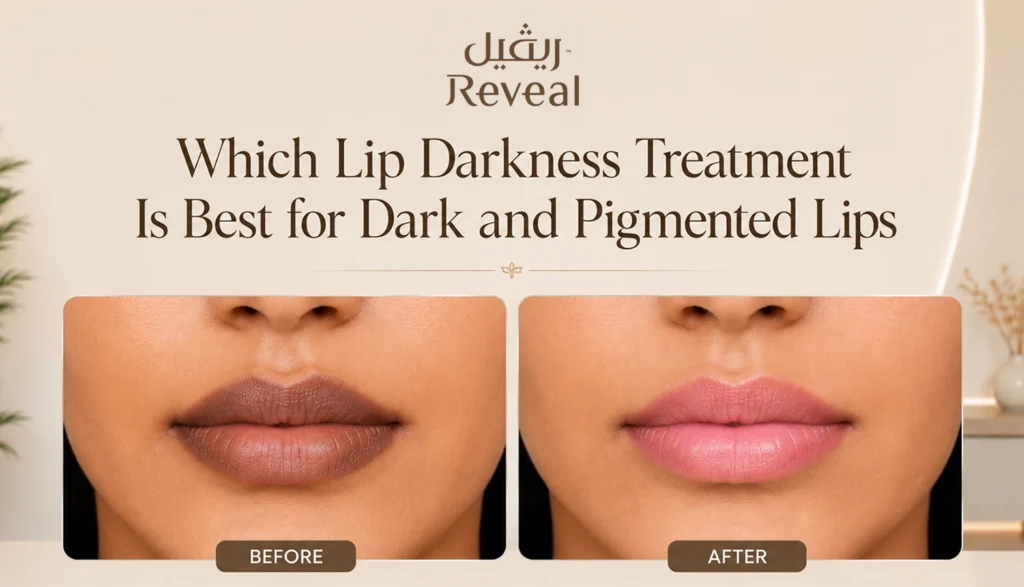
Dark or uneven lip color can affect people of different ages and skin tones. Some individuals have naturally dark lips because of genetics, while others develop gradual lip discoloration, uneven tone, or dark patches due to sun exposure, smoking, irritation, hormonal changes, or certain medications. Because the causes vary, choosing the right lip darkness treatment requires more than using a popular cream or trying a home remedy.
The best treatment for dark lips depends on the cause, depth, and pattern of pigmentation. Options such as laser lip lightening, a professionally selected chemical peel, prescription depigmenting creams, mesotherapy, and microneedling may help reduce excess pigment and restore a more even lip tone. However, no single treatment is suitable for everyone, especially when pigmentation is genetic or related to an underlying medical condition.
At Reveal Clinic in Riyadh, lip pigmentation is assessed according to its pattern, possible triggers, natural skin tone, lip condition, and treatment history. A personalized approach may support pigmentation correction, improve lip texture, and gradually restore natural lip color while reducing the risk of irritation or rebound pigmentation. The goal is healthier-looking, smoother, and more evenly toned lips not an artificial or unrealistic shade.
What Causes Lip Darkness and Pigmentation?
Natural lip color is influenced by melanin, blood vessels, skin thickness, genetics, and overall lip health. Melanocytes, specialized pigment cells, produce melanin to protect tissue from environmental damage. When melanin production becomes excessive or uneven, the lips may develop hyperpigmentation, brown areas, dark edges, or an irregular tone.
The reason for dark lips is not always cosmetic. Persistent lip hyperpigmentation may be associated with UV exposure, smoking, chronic dryness, allergic reactions, nutritional deficiencies, hormonal changes, or medications. Repeated inflammation can also cause chapped dark lips and uneven pigmentation. Identifying the underlying cause is essential before choosing a professional dark lips treatment.
Lifestyle Factors That Darken Lips
Daily habits can gradually contribute to lip discoloration. Frequent lip licking removes protective moisture, while repeated biting, picking, friction, or aggressive lip exfoliation may cause inflammation that stimulates excess melanin. Over time, these habits can contribute to dryness, rough texture, and uneven pigmentation.
Low water intake and dehydration may make the lips appear dry or dull. Excessive caffeine may indirectly worsen dryness when it replaces adequate water intake. A consistent lip care routine based on hydration, gentle moisturization, and protection may improve surface dullness, although deeper pigmentation usually requires targeted treatment.
Medical Conditions and Hormonal Changes
Certain medical conditions, hormonal changes, and nutritional deficiencies may affect lip color. Vitamin B12 deficiency, folate deficiency, and iron deficiency can influence the appearance of the lips and surrounding tissue, although lip darkening alone cannot confirm a deficiency.
Hormonal imbalance, pregnancy pigmentation, and conditions such as melasma may increase pigment activity. Less commonly, Addison’s disease can cause pigmentation of the lips, gums, and other areas. Sudden, widespread, or unexplained changes should receive medical assessment rather than being treated only as a cosmetic concern.
Sun Exposure and UV Damage
The lips receive regular sunlight but are often excluded from daily sun protection. Repeated UV exposure stimulates melanocytes, increases melanin production, and may cause tanned lips, uneven color, or persistent dark patches. Riyadh’s strong sunlight makes lip protection important throughout the year.
Daily use of a broad-spectrum SPF lip balm, ideally a lip balm with SPF 30 or higher, may help prevent further sun damage. Consistent sun protection is also essential after professional pigmentation treatment because newly treated lip tissue may be more sensitive to ultraviolet radiation.
Smoking and Tobacco-Related Lip Pigmentation
Smoking is a recognized cause of acquired lip darkening. Repeated exposure to heat, nicotine, and tobacco chemicals may stimulate pigment activity and contribute to smoking melanosis. Over time, the lips may develop a darker tone, uneven patches, dryness, or more noticeable pigmentation around the edges.
Although laser treatment for dark lips and other professional procedures may reduce visible pigmentation, continued tobacco use can encourage discoloration to return. Long-term improvement should be supported by smoking cessation, hydration, moisturization, and UV protection.
Allergic Reactions and Cosmetic Products
Lipsticks, lip tints, fragranced balms, toothpaste, mouthwash, and skincare products may trigger an allergic reaction, irritant contact dermatitis, or cosmetic allergy. Repeated inflammation can cause post-inflammatory pigmentation, leaving the lips darker even after redness or peeling improves.
Burning, itching, cracking, scaling, or dark lips edges after using a new product may indicate irritation or allergy. A dermatologist may recommend stopping suspected triggers and repairing the lip barrier before beginning lip pigmentation removal or active treatment.
How to Identify the Type of Lip Pigmentation Before Choosing a Treatment
Not all pigmented lips develop for the same reason. Before recommending a professional lip pigmentation treatment, a dermatologist may assess when the discoloration began, whether it is stable or worsening, its pattern, associated symptoms, lifestyle habits, medications, and previous treatments.
Diffuse brown pigmentation may be genetic, while darkening in sun-exposed areas may indicate UV-related changes. Pigmentation accompanied by dryness or irritation may suggest post-inflammatory hyperpigmentation. Clinical assessment helps distinguish cosmetic pigmentation from changes requiring medical investigation.
Genetic Lip Pigmentation
Some people naturally have more active melanocytes or higher melanin levels in the lips. Genetics may cause evenly distributed brown or dark colored lips from childhood, particularly in people with deeper skin tones. This is a normal variation rather than a disease.
Treating dark lips on dark skin requires a conservative approach because aggressive procedures may trigger inflammation and additional pigmentation. Treatment generally aims to improve excessive or uneven darkening rather than completely change natural lip color.
Sun-Induced Pigmentation
Sun-induced pigmentation may appear as diffuse darkening, uneven tone, or darker areas on the lower lip. People who spend significant time outdoors without lip sunscreen may notice their lips turn dark during periods of increased sun exposure.
Treatment may involve strict UV protection, topical brightening care, or carefully selected laser therapy. Daily SPF lip balm remains essential because treatment cannot prevent new pigmentation when the lips continue to receive unprotected UV exposure.
Smoker’s Lips
Smoker’s lips may appear as diffuse brown discoloration, darker edges, or irregular patches accompanied by dryness and changes in lip texture. This pattern is commonly associated with smoking melanosis, although other causes should still be considered.
Treatment begins with reducing or stopping smoking. Depending on pigment depth and lip condition, a dermatologist may recommend laser lip lightening, gentle chemical exfoliation, topical ingredients, or combination treatment.
Post-Inflammatory Hyperpigmentation
Post-inflammatory hyperpigmentation may develop after allergy, chronic dryness, lip trauma, repeated irritation, or aggressive scrubbing. It can cause bottom lip darkening, uneven patches, or persistent discoloration after severe chapping, lip licking, or cosmetic reactions.
Treatment should first address the trigger and restore the protective lip barrier. Once the lips have healed, a dermatologist may recommend gentle pigmentation correction, topical ingredients, or an appropriate in-clinic procedure.
Pigmentation Caused by Medications
Some medications may alter melanin production or pigment distribution, causing changes in the lips, gums, oral tissue, or skin. Certain long-term medicines and some forms of chemotherapy have been associated with pigmentation changes.
Prescribed medication should never be stopped without consulting the treating doctor. A dermatologist can assess the pigmentation pattern and determine whether cosmetic treatment is appropriate.
Which Lip Darkness Treatment Is Best? A Complete Comparison
The best treatment for pigmented lips depends on the cause, pigment depth, natural skin tone, sensitivity, and desired outcome. Laser lip lightening may be effective for selected forms of excess melanin, while a professional chemical peel or topical treatment may be more appropriate for superficial discoloration. If the lips are inflamed, severely dry, or affected by allergy, barrier repair may be necessary first.
A qualified dermatologist or cosmetic dermatologist can determine whether a single procedure or combination approach is suitable. Professional treatment aims to reduce melanin, improve uneven tone, support lip rejuvenation, and protect delicate lip tissue. No treatment can guarantee permanently pink lips because natural color is influenced by genetics, hormones, lifestyle, and ongoing melanin production.
Pigmentation Caused by Medications
Laser lip lightening uses controlled energy to target concentrated pigment. Depending on the pigmentation pattern and skin type, a dermatologist may consider a Q-switched laser, Q-Switched Nd:YAG Laser, or another pigment-focused technology. The treated pigment is gradually processed by the body, allowing a more even appearance to develop.
A lip laser treatment may be suitable for sun-induced pigmentation, smoking melanosis, or selected cases of uneven tone. Several sessions may be required because aggressive settings can increase inflammation and the risk of post-inflammatory hyperpigmentation.
At Reveal Clinic, PicoWay may be considered after an individualized pigmentation assessment when clinically appropriate. However, not every case requires laser treatment. The cause, lip condition, medical history, and expected outcome should be evaluated first.
Chemical Peels for Lip Pigmentation
A professional chemical peel uses carefully selected exfoliating ingredients to improve superficial pigmentation, rough texture, and dullness. Controlled chemical exfoliation supports dead skin removal and may gradually create a smoother lip surface.
Treatment may involve a mild glycolic acid peel, carefully selected TCA peel, or another lip-appropriate formulation. Standard facial peel strengths may be unsuitable because lip tissue is thin and sensitive. Strong acids, unsupervised lip peeling, or frequent exfoliation may cause burns and darker post-inflammatory pigmentation.
Products marketed as a typology lip peel may improve surface smoothness but should not be expected to treat deep pigmentation. Professional assessment can determine whether a peel or another lip lightening treatment is more suitable.
Prescription Depigmentation Creams
A dermatologist may recommend a depigmenting cream containing ingredients that regulate excess pigment formation. Depending on the diagnosis, treatment may include kojic acid, arbutin, niacinamide, vitamin C, licorice extract, or other ingredients associated with gradual melanin inhibition.
In selected cases, hydroquinone may be considered under medical supervision. A standard hydroquinone cream should not be applied directly to the lips without professional guidance because incorrect use may cause irritation or uneven lightening.
Topical treatment generally takes several weeks or months. A supportive medical lip balm containing ingredients such as hyaluronic acid may maintain hydration, strengthen the lip barrier, and improve treatment tolerance.
Lip Mesotherapy
Mesotherapy delivers small amounts of selected ingredients into or near the treatment area using fine injections. Formulations may contain hydrating compounds, antioxidants, peptides, or brightening ingredients. Some protocols include glutathione, although outcomes vary.
Mesotherapy may improve hydration, dullness, and overall lip quality but may not be sufficient for deep or strong genetic pigmentation. It may be most useful as part of a personalized lip rejuvenation or combination treatment plan.
Microneedling with Brightening Serums
Microneedling creates controlled microchannels that support tissue renewal and may improve the delivery of selected brightening ingredients. When performed conservatively, it can encourage collagen stimulation, improve lip texture, and support gradual pigmentation correction.
Professional serums may contain niacinamide, peptides, or antioxidants. Only sterile clinical formulations should be used because ordinary cosmetic products may increase the risk of irritation, infection, or allergy.
Microneedling may be more suitable for mild pigmentation accompanied by roughness than for deeply established discoloration. It is often part of a broader professional lip treatment.
PRP Therapy
Platelet-rich plasma (PRP) uses a concentrated component of the patient’s blood to support tissue repair. Around the lips, PRP may improve hydration, texture, and overall tissue quality. However, its role in directly reducing melanin is less established than pigment-targeting lasers or selected topical ingredients.
PRP may be considered when dark lips are accompanied by dryness, dullness, fine lines, or reduced tissue quality. Results develop gradually, and multiple sessions may be recommended.
Lip Blush Tattoo
Lip blush deposits cosmetic pigment into the lips to create a more balanced appearance. Unlike lip pigmentation removal, it does not reduce melanin or treat the underlying cause. Instead, it adds color to improve visual tone, definition, and symmetry.
People with naturally dark lips may require color neutralization before the desired shade can be achieved. The result depends on natural lip color, pigment selection, technique, and healing response.
Combination Treatments
Combination treatment may provide balanced results when several factors contribute to pigmentation. A dermatologist may combine conservative laser treatment with pigment-regulating topical ingredients, lip hydration therapy, and strict sun protection.
At Reveal Clinic in Riyadh, treatment may be personalized according to skin tone, pigment depth, sensitivity, medical history, and goals. The most appropriate plan may involve laser therapy, topical care, controlled exfoliation, or staged combination treatment.
Lip Darkness Treatments Compared: Which One Delivers the Best Results?
Treatment effectiveness depends on the cause and depth of pigmentation, natural lip color, sensitivity, and whether triggers such as UV exposure, smoking, or irritation remain active. Laser treatment for dark lips may provide targeted correction, while a gentle chemical peel may be better suited to superficial dullness. Topical products work more gradually but may support long-term pigment control.
For selected acquired pigmentation, a Q-switched laser may help break down excess melanin. Chemical peels may improve mild surface pigmentation and roughness, while mesotherapy, microneedling, and PRP primarily support hydration, texture, and rejuvenation. Lip blush provides cosmetic color correction rather than treating melanin.
The number of sessions varies. Laser and peel treatments often require a planned series, while topical creams may require several weeks or months. Genetic pigmentation may need more sessions and periodic maintenance because treatment does not eliminate the natural tendency to produce melanin.
Recovery also differs. Laser treatment may cause temporary warmth, redness, swelling, dryness, or slight darkening. Chemical peels can cause controlled flaking, while injection-based procedures may cause short-term tenderness or bruising. Patients should avoid picking or scrubbing peeling skin because this may delay healing and increase hyperpigmentation.
Best Lip Pigmentation Treatment Based on the Cause
Best Treatment for Smoker’s Lips
The first step is reducing or stopping tobacco use. Heat, nicotine, and tobacco chemicals may contribute to smoking melanosis. For persistent discoloration, treatment may include laser therapy, a gentle chemical peel, topical ingredients, or a combination approach.
Treatment can help lighten dark lips, but continued smoking increases the risk of recurrence. Moisturization, hydration, and daily SPF lip balm may support longer-lasting results.
Best Treatment for Sun-Damaged Lips
Sun-related pigmentation requires correction and prevention. Depending on pigment depth, treatment may include controlled exfoliation, dermatologist-selected topical care, or laser therapy.
Daily use of a broad-spectrum lip balm with SPF 30 or higher is essential. In Riyadh, regular reapplication after eating, drinking, or prolonged outdoor exposure can help prevent additional pigmentation.
Best Treatment for Genetic Pigmentation
Naturally dark lips are a normal genetic characteristic. Treatment should focus on improving unwanted unevenness rather than promising to permanently change natural lip color.
A cosmetic dermatologist may consider conservative laser settings, selected topical ingredients, or a gradual combination plan. Aggressive treatment may trigger rebound hyperpigmentation, especially in deeper skin tones.
Best Treatment for Hormonal Pigmentation
Hormonal changes may contribute to lip pigmentation, particularly when associated with melasma, hormonal imbalance, or pregnancy pigmentation. Sun protection and gentle topical care may be recommended initially.
During pregnancy or breastfeeding, certain prescription ingredients and elective procedures may not be appropriate. Treatment should be individualized, and non-essential procedures may need to be delayed.
Best Treatment for Medication-Induced Lip Darkness
Medication-related pigmentation should first be medically assessed. Patients should not stop or change prescribed medication without consulting their doctor.
Once the condition is stable, persistent pigmentation may be managed with dermatologist-supervised topical products or selected professional treatments. Medical safety takes priority over cosmetic correction.
Are Home Remedies Effective for Dark Lips?
Many home remedies for dark lips claim to create permanently pink lips. Some may temporarily improve dryness or remove loose surface flakes, but they generally do not remove deep melanin or treat genetic, hormonal, medication-related, or established pigmentation.
Gentle ingredients such as aloe vera gel, coconut oil, almond oil, glycerin, and fragrance-free lip balm may reduce moisture loss and support softer lips. Honey may act as a humectant. Beetroot, pomegranate, and rose water may add temporary color or freshness, but evidence that they permanently lighten pigmentation is limited.
Ingredients such as beetroot, turmeric, cucumber juice, and herbal mixtures are sometimes promoted as a cure for black lips, but evidence is limited. A homemade sugar scrub may remove loose flakes, while olive oil may moisturize temporarily. These remedies do not change melanocyte activity or reliably reduce melanin.
Using lemon juice for dark lips may cause burning, dryness, peeling, or irritation. Baking soda, toothpaste, undiluted essential oils, strong scrubs, and unregulated bleaching products may damage the lip barrier and worsen pigmentation.
Persistent darkening, pain, swelling, cracking, unusual pink patches on lips, or rapidly changing pigmentation should be assessed by a dermatologist rather than repeatedly treated at home.
Dermatologist-Recommended Ingredients for Lip Brightening
Topical ingredients may support gradual lip brightening when selected according to the cause and sensitivity of the lips. Because lip tissue is thin and reactive, ordinary facial products should not automatically be applied to this area.
Kojic acid may reduce excess melanin formation by influencing tyrosinase. A kojic acid cream should only be used when its concentration and formulation are suitable for the lips.
Alpha arbutin supports a more even appearance by influencing melanin-related pathways. It may be included in a gradual treatment plan alongside hydration and UV protection.
Niacinamide supports the lip barrier and may help reduce visible pigment transfer. It may be useful when pigmentation occurs with dryness or mild irritation.
Vitamin C provides antioxidant support and may contribute to a brighter appearance. Some forms are acidic, so stable derivatives in lip-appropriate formulations may be better tolerated.
Tranexamic acid may help regulate signals involved in excess pigment production in selected cases. Its use on the lips requires professional guidance.
Licorice root extract may support gradual brightening and provide antioxidant and soothing benefits. It is generally used as a supportive ingredient rather than a stand-alone treatment.
Peptides support hydration, barrier function, and tissue renewal. Although they do not directly remove melanin, they may improve lip texture, softness, and overall quality. They are often combined with hyaluronic acid and moisturizing ingredients.
How Long Does Lip Darkness Treatment Take to Show Results?
The timeline depends on the cause, pigment depth, natural skin tone, selected procedure, and aftercare. Mild surface discoloration may improve within weeks, while deeper, genetic, or long-standing pigmentation may require several months.
After laser treatment, the lips may initially appear red, dry, swollen, or temporarily darker. Some patients notice improvement within two to four weeks after a session, although several treatments may be needed.
A professional chemical peel may improve smoothness within one to two weeks, while pigmentation often requires a series of gentle treatments. Aggressive peeling may damage the lip barrier and worsen discoloration.
Topical creams usually require several weeks of consistent use. Some patients notice subtle improvement within four to eight weeks, although deeper pigmentation may take longer.
Lip blush color may initially appear brighter or darker before softening. The final tone is generally assessed after four to eight weeks. Unlike pigment removal, lip blush adds cosmetic color and does not reduce melanin.
Before and After Lip Darkness Treatment: What to Expect
Results vary according to natural lip color, pigmentation cause, pigment depth, treatment type, and healing response. Some patients experience a noticeable reduction in dark patches, while others see gradual improvement in brightness, smoothness, texture, and overall tone.
Before treatment, a dermatologist may review medical history, medications, allergies, previous procedures, smoking habits, lip products, and any history of cold sores. Active infection, inflammation, severe dryness, or cracking may need to be treated first.
Temporary redness, swelling, warmth, dryness, tenderness, or slight darkening may occur after treatment. A gentle healing ointment or medical lip balm may be recommended. During early recovery, patients may need to limit hot or spicy foods, smoking, excessive heat, vigorous exercise, and direct sun exposure.
The lips should not be picked, peeled, rubbed, or aggressively exfoliated. Lipstick, fragranced products, active acids, strong brightening ingredients, and homemade remedies should be avoided until healing is complete.
Long-term results depend on whether the original trigger remains active. Daily lip sunscreen, moisturization, hydration, smoking cessation, and avoidance of irritating products may help preserve improvement. Genetic and hormonal pigmentation may require periodic maintenance.
Side Effects and Risks of Lip Pigmentation Treatments
Professional treatment is generally well tolerated when appropriately selected and performed by a qualified provider. However, potential side effects depend on treatment type, natural skin tone, pigment depth, product strength, medical history, and aftercare.
Common temporary effects include redness, swelling, warmth, tenderness, dryness, tightness, flaking, or sensitivity. Laser-treated pigment may temporarily appear darker. Mesotherapy and PRP may cause minor swelling or bruising, while chemical peels can cause controlled dryness.
Rare complications include prolonged inflammation, infection, blistering, burns, scarring, allergic reactions, or persistent changes in lip color. Unsuitable laser settings or strong peeling agents may increase the risk of tissue injury and post-inflammatory hyperpigmentation.
People with active cold sores, infections, open wounds, severe chapping, or uncontrolled dermatitis may need to delay treatment. Pregnant or breastfeeding patients may need to avoid certain prescription ingredients and elective procedures. Individual assessment is also important for people with abnormal scarring, autoimmune conditions, bleeding disorders, or significant medication use.
How Much Does Lip Darkness Treatment Cost?
The cost of lip darkness treatment in Riyadh depends on the cause and depth of pigmentation, selected procedure, technology, provider expertise, and number of sessions. An accurate price is generally provided after consultation because treatment should be based on diagnosis rather than a standard package.
Laser treatment cost varies according to the technology, treatment complexity, and number of sessions. A Q-switched laser, Nd:YAG Laser, or advanced picosecond system may be priced per session or as part of a treatment course.
Chemical peel cost depends on the formulation, strength, number of sessions, and whether it is combined with another procedure. Prescription treatment costs vary according to the formulation, active ingredients, treatment duration, and follow-up requirements.
Lip blush pricing depends on provider experience, pigment quality, treatment complexity, and whether color neutralization is required. The initial cost may or may not include a touch-up appointment.
Maintenance may include periodic laser sessions, occasional peels, replacement topical products, or future lip blush touch-ups. Daily preventive products such as SPF lip balm and moisturizer may reduce the need for frequent corrective treatment.
Daily Lip Care Tips to Prevent Pigmentation from Returning
Professional treatment may reduce visible pigmentation, but maintaining results requires consistent care. Daily sun protection, moisturization, adequate hydration, and avoiding known triggers can support healthy lips, smoother texture, and an even natural tone.
Use SPF Lip Balm Daily
Use a broad-spectrum SPF lip balm with SPF 30 or higher before outdoor exposure. Reapply after eating, drinking, or wiping the lips. In Riyadh’s climate, year-round lip sunscreen is especially important after laser treatment or a chemical peel.
Keep Your Lips Hydrated
Regularly moisturizing lips support the protective barrier and may reduce lip licking, biting, and peeling. Ingredients such as hyaluronic acid, glycerin, ceramides, or petrolatum may help retain moisture.
People with chapped dark lips should focus on barrier repair before using strong brightening ingredients. Applying acids to cracked lips may worsen inflammation and pigmentation.
Avoid Smoking
Heat, nicotine, and tobacco chemicals may contribute to smoking melanosis, dryness, uneven pigmentation, and changes in texture. Stopping smoking may not immediately remove existing pigment, but it can support longer-lasting treatment results.
Exfoliate Gently
Gentle exfoliation may remove loose surface flakes, but aggressive scrubbing can weaken the lip barrier and increase pigment production. A soft, damp cloth may be sufficient for occasional dead skin removal.
Exfoliation improves surface smoothness but cannot remove deep melanin. Persistent pigmentation requires assessment of the underlying cause.
Common Mistakes That Can Make Lip Pigmentation Worse
Frequent scrubbing, combining several strong active ingredients, and using harsh DIY remedies may damage the lip barrier and trigger inflammation. Since inflammation can stimulate pigment cells, aggressive treatment may worsen discoloration.
Excessive scrubbing may cause microscopic injury, dryness, sensitivity, and post-inflammatory pigmentation. A homemade lip scrub should not be used daily or rubbed until the lips become red.
Natural does not always mean safe. Lemon juice, baking soda, toothpaste, essential oils, and abrasive mixtures may cause irritation. Persistent pigmentation should be treated according to its cause rather than repeatedly exposed to household remedies.
Skipping aftercare may also delay recovery. Patients should follow procedure-specific instructions and avoid using active ingredients too early, picking peeling skin, or exposing treated lips to strong sunlight.
How to Choose the Right Dermatologist or Lip Pigmentation Clinic
Choose a qualified provider who can assess whether pigmentation is genetic, environmental, inflammatory, hormonal, medication-related, or medical. A reliable clinic should explain the likely cause, available treatments, expected results, risks, recovery, and maintenance.
Confirm that assessment and treatment are performed or supervised by an appropriately qualified dermatologist or cosmetic dermatologist. Experience with different skin tones is valuable because treatment response and the risk of post-inflammatory pigmentation can vary.
Ask why a specific technology is recommended and whether it is appropriate for the pigmentation pattern. A Q-switched laser, Nd:YAG Laser, or advanced picosecond technology may be considered for selected concerns. At Reveal Clinic, PicoWay may be evaluated when clinically appropriate.
Other energy-based devices serve different purposes. M22 IPL (Intense Pulsed Light) may be considered for selected skin pigmentation or vascular concerns, but suitability depends on the area, diagnosis, and individual skin characteristics.
Review before-and-after photos from cases with similar skin tones and pigmentation patterns, but remember that lighting, makeup, hydration, and editing may affect appearance. Before treatment, understand the expected sessions, recovery, side effects, aftercare, maintenance, and realistic outcome.
Frequently Asked Questions (FAQ)
Can Dark Lips Become Pink Again Permanently?
Acquired pigmentation may become lighter and more even after appropriate treatment, but permanently pink lips cannot be guaranteed. Natural lip color is influenced by genetics, melanin, skin tone, hormones, and environmental exposure.
Which Lip Darkness Treatment Works the Fastest?
Laser treatment may provide faster visible improvement than topical creams for selected pigmentation. However, the fastest treatment is not always the safest or most appropriate. The cause and pigment depth should be assessed first.
Is Laser Better Than Lip Blush?
Laser treatment aims to reduce selected types of excess pigment, while lip blush adds cosmetic color. Laser may be more appropriate for acquired melanin-related pigmentation, whereas lip blush may support cosmetic color correction.
Can Men Get Lip Pigmentation Treatment?
Yes. Men may receive treatment for pigmentation related to smoking, sun exposure, genetics, dryness, irritation, medications, or other causes. Treatment is based on the pigmentation pattern rather than gender.
Does Smoking Cause Lip Pigmentation to Return?
Yes. Continued smoking may stimulate pigment activity and contribute to recurrent smoking melanosis. Smoking cessation, SPF lip balm, and hydration may support longer-lasting results.
Are Lip Lightening Treatments Safe?
Professional treatments can be safe when correctly selected and performed by a qualified provider. Temporary redness, swelling, dryness, or peeling may occur. Less common risks include burns, infection, scarring, allergy, and pigment changes.
Can I Wear Lipstick After Treatment?
Lipstick is generally avoided during early healing because cosmetic products may irritate treated tissue. Patients should wait until the lips have healed or follow the timeline provided by their treatment provider.
How Many Sessions Will I Need?
The number of sessions depends on the cause, depth, duration, and pattern of pigmentation. Laser treatments and chemical peels may require several sessions, while topical treatments generally require consistent use for several weeks or months.
Conclusion
The best treatment for dark lips depends on the underlying cause, pigment depth, natural lip color, skin tone, sensitivity, and condition of the lip barrier. Laser therapy may provide targeted improvement for selected acquired pigmentation, while a professional chemical peel, dermatologist-prescribed topical care, mesotherapy, microneedling, PRP, or combination treatment may be more suitable in other cases.
Effective lip pigmentation correction begins by identifying whether discoloration is related to genetics, UV exposure, smoking melanosis, chronic irritation, hormonal changes, medications, or another medical factor. Treating visible pigment without controlling the trigger may produce temporary improvement followed by recurrence.
At Reveal Clinic in Riyadh, treatment can be personalized according to the pigmentation pattern, medical history, lip condition, natural skin tone, and individual goals. Long-term care including daily SPF lip balm, hydration, gentle moisturization, smoking avoidance, and appropriate aftercare can help maintain smoother, healthier-looking, and more evenly toned lips.