
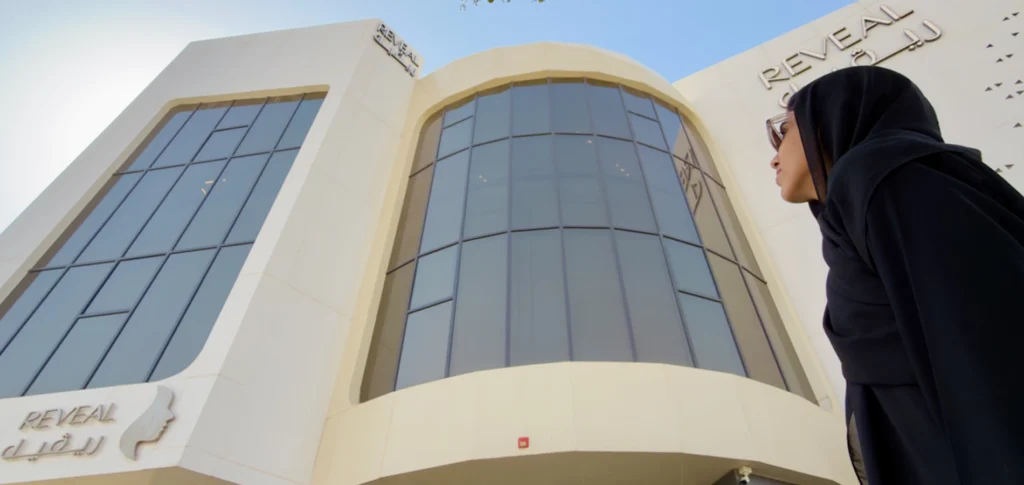
Living in Riyadh means experiencing intense sunshine, high temperatures, low humidity, and frequent dust storms throughout much of the year. Understanding how Riyadh’s heat and dust affect your skin health is essential for maintaining a healthy complexion and preventing common skin concerns. At Reveal Clinic Riyadh, our dermatology specialists regularly help patients manage skin issues caused by the city’s unique climate, offering personalized advice and evidence-based skincare solutions.
Your skin serves as the body’s first line of defense against environmental stressors, including ultraviolet (UV) rays, airborne dust, pollution, and moisture loss. Continuous exposure to these conditions can weaken the skin’s natural protective barrier, leading to dehydration, irritation, increased sensitivity, clogged pores, uneven skin tone, and premature signs of aging. Spending time outdoors followed by long hours in air-conditioned environments can further strip the skin of its natural moisture, making proper skincare even more important.
Many residents in Riyadh experience concerns such as dry skin, acne breakouts, dullness, redness, hyperpigmentation, melasma, and fine lines that become more noticeable during periods of extreme heat or dusty weather. While these issues are common, they can often be minimized with the right skincare routine, healthy daily habits, and guidance from qualified dermatology professionals.
In this guide, the experts at Reveal Clinic Riyadh explain how Riyadh’s climate affects your skin, why these changes occur, and practical dermatologist-recommended tips to help protect your skin and maintain a healthy, radiant complexion throughout every season.
Why Riyadh’s Climate Can Be Challenging for the Skin
Riyadh has a desert climate, which means the weather is often hot, dry, and dusty. This combination can place continuous stress on the skin. High temperatures increase sweating, while low humidity causes water to evaporate from the skin more quickly. As a result, the skin may feel tight, rough, flaky, or dehydrated.
Strong sun exposure is another major factor. UV rays can damage the skin, especially when sunscreen is not used consistently. Over time, sun exposure can lead to uneven skin tone, dark spots, melasma, fine lines, wrinkles, and premature aging.
Dust exposure can also affect the skin. Fine particles may settle on the face during the day, especially when the skin is sweaty or oily. If dust is not removed properly, it may contribute to clogged pores, irritation, and sensitivity.
How Heat Affects the Skin
Heat affects the skin in more ways than many people realize. When the temperature rises, the body produces sweat to cool itself down. Sweating is natural, but when sweat remains on the skin and mixes with oil, sunscreen, makeup, and dust, it can lead to buildup on the skin’s surface.
This buildup may block pores and increase the risk of blackheads, whiteheads, and acne breakouts. People with oily or acne-prone skin may notice more shine, enlarged pores, or frequent pimples during hot weather.
Heat can also increase water loss from the skin. This may cause dehydrated skin, which can look dull, tired, or uneven. Dehydrated skin does not always feel dry on the surface. Some people may still have oily skin but feel tightness underneath, which means the skin lacks water rather than oil.
A common mistake is washing the face too often or using strong cleansers to remove sweat and oil. While cleansing is important, harsh products can strip the skin’s natural protective barrier. This may lead to more dryness, redness, sensitivity, and irritation.
How Dust Affects the Skin
Dust is one of the most common environmental skin stressors in Riyadh. Dust particles can collect on the skin during outdoor activities, driving, walking, or exposure to dusty weather. These particles may mix with sweat, sebum, sunscreen, and dead skin cells.
When this mixture stays on the skin for too long, it may clog pores and trigger breakouts. This is especially common for people with acne-prone or oily skin. Dust may also make the skin look dull and rough because impurities build up on the surface.
Dust can also irritate the skin barrier. The skin barrier is the outer layer that helps keep moisture inside and irritants outside. When this barrier becomes weak, the skin may become more sensitive, dry, itchy, or red.
People with sensitive skin, eczema, or rosacea may notice more flare-ups during dusty days. Their skin may feel inflamed, uncomfortable, or reactive. For this reason, gentle cleansing and barrier-supporting skincare are important in Riyadh’s climate.
Sun Exposure, Dark Spots, and Premature Aging
Sun exposure is one of the biggest causes of skin damage in hot climates. In Riyadh, strong sunlight can affect the skin even during daily activities such as driving, walking, or sitting near windows.
UV rays can trigger pigmentation problems such as dark spots, sun spots, uneven tone, and melasma. Melasma is especially sensitive to both sunlight and heat, which means it may become darker or more stubborn during hot weather.
Sun exposure can also speed up visible aging. UV rays break down collagen and elastin, two important proteins that keep the skin firm, smooth, and youthful. When these proteins weaken, the skin may begin to show fine lines, wrinkles, rough texture, and loss of firmness.
Daily sunscreen is one of the most important steps for protecting the skin. A broad-spectrum sunscreen with SPF 30 or higher helps protect against UVA and UVB rays. Reapplication is also important, especially when sweating, spending time outdoors, or being exposed to direct sunlight.
Why Air Conditioning Can Make Skin Dryness Worse
helps cool the body, it can also reduce moisture in the air. This may cause the skin to lose hydration more quickly.
Moving between hot outdoor weather and cold indoor air can also disturb the skin’s balance. The skin may deal
with sweat, dust, and sun exposure outside, then dryness and moisture loss indoors. Over time, this cycle may
weaken the skin barrier.This can lead to tightness, flakiness, dullness, and sensitivity. To reduce dryness, it is
helpful to use moisturizers with ingredients such as hyaluronic acid, glycerin, ceramides, and panthenol.
These ingredients help support hydration and protect the skin barrier.
Common Skin Problems Linked to Riyadh’s Heat and Dust
| Environmental Factor | How It May Affect the Skin |
|---|---|
Extreme heat |
Increases sweating, oil buildup, and clogged pores |
Dust particles |
May cause irritation, sensitivity, and breakouts |
Low humidity |
Leads to moisture loss, dryness, and tightness |
Strong UV exposure |
Causes pigmentation, sunburn, and early aging |
Air conditioning |
Can worsen dryness and weaken the skin barrier |
The most common skin concerns related to Riyadh’s climate include acne, dryness, dullness, pigmentation, melasma, redness, irritation, and premature aging. These concerns may appear differently from one person to another depending on skin type, lifestyle, skincare habits, and sun exposure.
For example, oily skin may become more prone to clogged pores and acne. Dry skin may become tighter and more flaky. Sensitive skin may react with redness or burning. Pigmentation-prone skin may develop darker patches or uneven tone.
Best Skincare Routine for Riyadh Weather
A good skincare routine for Riyadh’s heat and dust should focus on four main goals: cleansing, hydration, sun protection, and skin barrier support.
Start with a gentle cleanser. Cleansing helps remove sweat, dust, sunscreen, oil, and impurities from the skin. However, the cleanser should not leave the skin feeling dry or tight. Over-cleansing can damage the skin barrier and make irritation worse.
Next, use a hydrating serum or moisturizer. Hyaluronic acid can help attract water to the skin, while ceramides and glycerin help support the skin barrier and reduce moisture loss. Even oily skin needs hydration, but lightweight and non-comedogenic products are usually better choices.
Antioxidants can also be helpful in hot and dusty environments. Ingredients such as vitamin C and niacinamide may support the skin against environmental stress, dullness, redness, and uneven tone.
Sunscreen should be used every morning. It is one of the most important steps for preventing sunburn, pigmentation, melasma, and premature aging. For acne-prone skin, choose a non-comedogenic sunscreen that does not feel heavy or greasy.
At night, focus on cleansing and repair. If the skin feels congested or dull, gentle exfoliation once or twice a week may help. However, over-exfoliation should be avoided because it can increase dryness, sensitivity, and redness.
When to See a Dermatologist
Daily skincare can help protect the skin, but some concerns may need professional care. If acne, pigmentation, melasma, redness, irritation, or dryness does not improve with a consistent routine, it may be time to visit a dermatologist.
A dermatologist can assess your skin type, identify what is causing the concern, and recommend a personalized treatment plan. Depending on the condition, professional options may include medical skincare, HydraFacial, gentle chemical peels, acne treatments, pigmentation treatments, or laser treatments.
The goal is not only to improve the appearance of the skin, but also to protect the skin barrier and prevent recurring problems.
Frequently Asked Questions (FAQ)
Can Riyadh’s dust cause acne?
Dust can contribute to acne when it mixes with sweat, oil, sunscreen, and dead skin cells. This buildup may clog pores and trigger breakouts, especially in acne-prone skin.
Why does my skin feel dry in Riyadh?
Riyadh’s low humidity, high temperatures, and indoor air conditioning can increase moisture loss from the skin. This may cause dryness, tightness, roughness, and dullness.
Can heat make pigmentation worse?
Yes. Heat and UV exposure can worsen dark spots, uneven skin tone, and melasma. This is why daily sunscreen and sun protection are important.
Should sunscreen be used every day in Riyadh?
Yes. Sunscreen should be used daily because UV rays can affect the skin during outdoor activities, driving, and even sitting near windows.
What ingredients help protect skin in hot and dusty weather?
Helpful ingredients include hyaluronic acid for hydration, ceramides for barrier support, vitamin C for antioxidant protection, niacinamide for redness and oil control, and broad-spectrum sunscreen for UV protection.
Conclusion
Riyadh’s heat and dust can affect your skin health in several ways. High temperatures, low humidity, strong UV exposure, dust particles, and air conditioning can all contribute to dryness, clogged pores, acne, irritation, pigmentation, melasma, and premature aging.
The best approach is to protect the skin daily with gentle cleansing, proper hydration, sunscreen, and barrier-supporting skincare. A consistent routine can help reduce environmental damage and keep the skin healthier, clearer, and more resilient.
For ongoing concerns such as acne, dark spots, melasma, redness, or sensitivity, professional dermatology care can help identify the right solution for your skin type and lifestyle in Riyadh.