
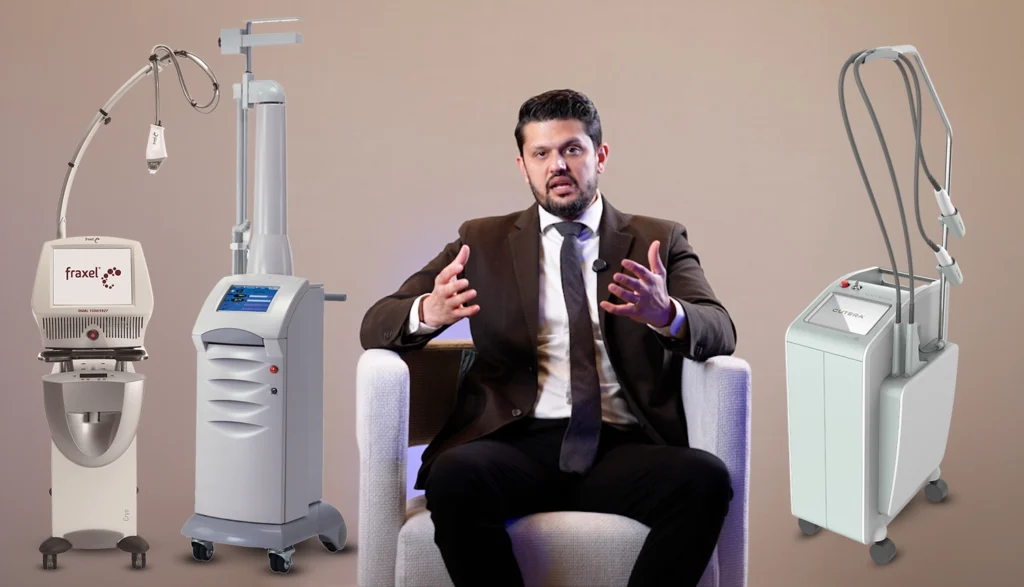
Fractional CO2 vs Fraxel vs Excel V is one of the most common questions patients ask when considering laser skin treatments. Although all three technologies improve skin quality, they work in different ways and target different concerns. Choosing the right laser depends on factors such as your skin condition, skin type, desired results, and recovery time.
In this educational guide, Dr. Saud Al-Obaida explains how dermatologists evaluate each patient’s skin before recommending a treatment. Whether your goal is smoother skin, acne scar improvement, pigmentation correction, or reducing facial redness, understanding the strengths of each laser can help you make a more informed decision.
Why Choosing the Right Laser Matters
Modern laser technology has transformed aesthetic dermatology, offering highly targeted treatments for a wide range of skin concerns. However, no single laser is designed to treat every condition effectively. Selecting the wrong treatment may lead to disappointing results, unnecessary downtime, or the need for additional sessions.
A dermatologist considers several factors before recommending a laser treatment, including:
- Your primary skin concern
- Fitzpatrick skin type
- Degree of sun damage
- Presence of pigmentation or vascular lesions
- History of previous laser treatments
- Desired downtime
- Long-term treatment goals
This personalized approach helps maximize results while minimizing potential side effects such as post-inflammatory hyperpigmentation or prolonged redness.
How Dermatologists Decide Which Laser to Use
Selecting the right laser treatment is not simply about identifying a skin concern—it requires a comprehensive evaluation of each patient’s skin and treatment goals. Experienced dermatologists begin with a detailed skin assessment to determine which technology is most likely to deliver safe, effective, and long-lasting results. Factors such as the type and severity of the condition, skin tone, medical history, and lifestyle all influence the treatment plan. For example, the Fractional CO2 laser is often recommended for deep acne scars, wrinkles, and advanced skin resurfacing, while the Fraxel laser is commonly chosen to improve pigmentation, uneven skin tone, and skin texture. Patients with rosacea, facial redness, or visible blood vessels may benefit most from Excel V laser, which is specifically designed to target vascular concerns.
Another important consideration is the patient’s Fitzpatrick skin type, particularly for individuals with darker skin tones, as laser settings may need to be carefully adjusted to minimize the risk of post-inflammatory hyperpigmentation. Recovery time also plays a key role in treatment selection. Some patients prefer more dramatic results even if they require a longer healing period, whereas others choose treatments with minimal downtime that allow them to return to daily activities sooner. Ultimately, the best laser is the one that aligns with the patient’s skin condition, expectations, and long-term goals, which is why a personalized consultation is an essential first step before beginning any laser treatment.
Fractional CO2 vs Fraxel vs Excel V
Choosing between these three technologies becomes much easier when you understand what each laser is specifically designed to treat.
| Feature | Fractional CO2 | Fraxel | Excel V |
|---|---|---|---|
Laser Type |
Ablative fractional laser |
Non-ablative fractional laser |
Vascular laser |
Primary Target |
Deep resurfacing |
Pigmentation & texture |
Blood vessels & redness |
Best For |
Acne scars, wrinkles |
Sun damage, pigmentation |
Rosacea, facial redness |
Collagen Stimulation |
Excellent |
Very Good |
Moderate |
Downtime |
Moderate |
Mild |
Minimal |
Sessions |
Usually 1–3 |
Usually 3–5 |
Usually 2–4 |
Skin Texture |
Excellent |
Excellent |
Good |
Pigmentation |
Good |
Excellent |
Good |
Redness & Veins |
Limited |
Limited |
Excellent |
Rather than asking which laser is “better,” the more important question is which laser is best for your specific skin concern. Each technology has a different mechanism of action, making it suitable for different treatment goals.
What Is Fractional CO2 Laser?
Fractional CO2 laser is an advanced ablative skin resurfacing treatment that is designed to address deeper skin concerns by creating microscopic columns of controlled thermal energy within the skin while preserving the surrounding healthy tissue. This fractional approach stimulates the body’s natural healing response, encouraging collagen remodeling and elastin production to restore smoother, firmer, and healthier-looking skin gradually. Because it penetrates deeper layers of the skin, the Fractional CO2 laser is particularly effective for improving deep acne scars, surgical scars, fine lines, wrinkles, sun-damaged skin, enlarged pores, uneven skin texture, skin laxity, and photoaging. As the skin continues to heal over the following months, new collagen forms and the skin becomes progressively firmer, smoother, and more even in tone and texture. Although Fractional CO2 laser generally involves a longer recovery period than non-ablative laser treatments, many patients find the downtime worthwhile because it can deliver significant, long-lasting improvements after just one or a few treatment sessions.
What Is Fraxel Laser?
laser energy beneath the skin’s surface without removing the outer layer. It stimulates
collagen production and supports natural skin renewal, making it an excellent option for
patients seeking gradual improvement with minimal downtime. Fraxel is commonly used
to treat pigmentation, sun damage, age spots, fine lines, uneven skin tone, mild acne scars,
and enlarged pores. Because the epidermis remains largely intact, most patients experience
only mild redness and swelling before returning to their normal routine within a few days.
Over the following weeks, collagen remodeling continues, resulting in smoother, brighter,
and more even-looking skin.
What Is Excel V Laser?
Excel V is an advanced vascular laser that uses two complementary wavelengths—532 nm KTP and 1064 nm Nd:YAG—to target visible blood vessels, vascular lesions, and selected pigmentation concerns with precision. Unlike resurfacing lasers that primarily improve skin texture, Excel V works by selectively heating abnormal blood vessels while preserving the surrounding healthy tissue, making it highly effective for treating vascular-related skin conditions. It is commonly recommended for rosacea, facial redness, broken capillaries, spider veins, cherry angiomas, visible facial veins, sunspots, certain types of pigmentation, mild acne scars, and uneven skin tone. The treatment is well known for its minimal downtime, allowing most patients to return to their normal daily activities shortly after the procedure. In addition, the device features an integrated cooling system that enhances patient comfort throughout the treatment, making Excel V an excellent option for individuals seeking noticeable improvements in redness and skin clarity without an extended recovery period.
Which Laser Is Best for Your Skin Concern?
While all three lasers improve overall skin quality, each one is designed to address different concerns. Choosing the right treatment depends on your diagnosis rather than selecting the newest or strongest technology.
| Skin Concern | Recommended Laser |
|---|---|
Deep acne scars |
Fractional CO2 |
Surgical scars |
Fractional CO2 |
Fine lines & wrinkles |
Fractional CO2 |
Enlarged pores |
Fractional CO2 or Fraxel |
Uneven skin texture |
Fraxel |
Pigmentation |
Fraxel |
Sun damage |
Fraxel |
Melasma (selected patients) |
Fraxel |
Rosacea |
Excel V |
Facial redness |
Excel V |
Broken capillaries |
Excel V |
Spider veins |
Excel V |
It’s important to remember that these recommendations are general guidelines. During your consultation, Dr. Saud Al-Obaida evaluates your skin type, medical history, treatment goals, and expected downtime before recommending the most suitable option.
Can These Laser Treatments Be Combined?
Yes. In many cases, combining laser treatments can provide more comprehensive results than using a single technology alone. Because Fractional CO2, Fraxel, and Excel V target different skin concerns, they may be incorporated into a customized treatment plan when clinically appropriate.
For example:
- Excel V may first reduce facial redness or visible blood vessels.
- Fraxel can then improve pigmentation and refine overall skin texture.
- Fractional CO2 may be recommended later for deeper acne scars or more advanced skin resurfacing.
Some patients also benefit from combining laser treatments with professional skincare, collagen-stimulating procedures, or other dermatologist-recommended therapies. A personalized treatment plan helps ensure each procedure complements the others while allowing adequate healing between sessions.
What to Expect Before and After Treatment
Preparing properly for laser treatment and following aftercare instructions are essential for achieving the best possible outcome.
Before Treatment
Your consultation may include:
- A detailed skin assessment
- Evaluation of your Fitzpatrick skin type
- Review of your medical history and medications
- Discussion of previous cosmetic procedures
- Personalized treatment planning
Depending on the selected laser, your dermatologist may recommend avoiding excessive sun exposure, tanning, retinoids, exfoliating products, or certain medications before treatment.
After Treatment
Recovery varies depending on the laser used.
Fractional CO2 generally involves the longest recovery period, while Fraxel and Excel V usually require less downtime.
Common temporary effects include:
- Mild redness
- Swelling
- Dryness or peeling
- Increased skin sensitivity
Following your dermatologist’s aftercare instructions is essential. This typically includes gentle skincare, regular moisturization, avoiding excessive heat, and using broad-spectrum SPF 50+ sunscreen every day to protect the healing skin.
Recovery Timeline
Recovery after laser treatment varies depending on the technology used and the intensity of the procedure. During the first 24 hours, it is normal to experience mild redness and swelling as the skin begins its healing response. Over the next two to five days, some patients may notice dryness, flaking, or peeling, particularly after more intensive resurfacing treatments such as Fractional CO2 laser. By the second week, most of the visible healing has taken place, and the skin often appears smoother with a more refined texture. Although early improvements can be seen within a few weeks, the skin continues to regenerate beneath the surface. Over the following two to three months, collagen remodeling and elastin production gradually enhance skin firmness, texture, and overall tone, with results continuing to improve as the healing process progresses.
Frequently Asked Questions (FAQ)
What is the difference between Fractional CO2, Fraxel, and Excel V?
Fractional CO2 is best for deep acne scars and wrinkles. Fraxel improves pigmentation and skin texture, while Excel V is designed to treat redness, rosacea, and visible blood vessels.
Which laser is best for acne scars?
Deep acne scars are usually treated with Fractional CO2, while mild acne scars and post-inflammatory pigmentation may respond well to Fraxel. The best choice depends on your skin assessment.
Which laser has the shortest recovery time?
Excel V typically has the least downtime, followed by Fraxel. Fractional CO2 requires a longer recovery because it resurfaces deeper layers of the skin.
Can darker skin tones have laser treatment?
Yes. With proper laser selection and customized settings, many patients with darker skin tones can safely undergo laser treatment under the care of an experienced dermatologist.
How many sessions are needed?
The number of sessions varies depending on your skin concern and treatment goals. Some patients see improvement after one session, while others benefit from multiple treatments for optimal results.
Conclusion
There is no single laser that is ideal for every patient. Fractional CO2, Fraxel, and Excel V each offer unique advantages and are designed to address different skin concerns, from acne scars and wrinkles to pigmentation, redness, and vascular lesions.
Rather than choosing a laser based solely on popularity, the most effective approach is a personalized consultation with an experienced dermatologist. By carefully evaluating your skin type, concerns, treatment goals, and recovery expectations, Dr. Saud Al-Obaida can recommend the most appropriate laser treatment to help you achieve healthier, smoother, and more confident-looking skin.