
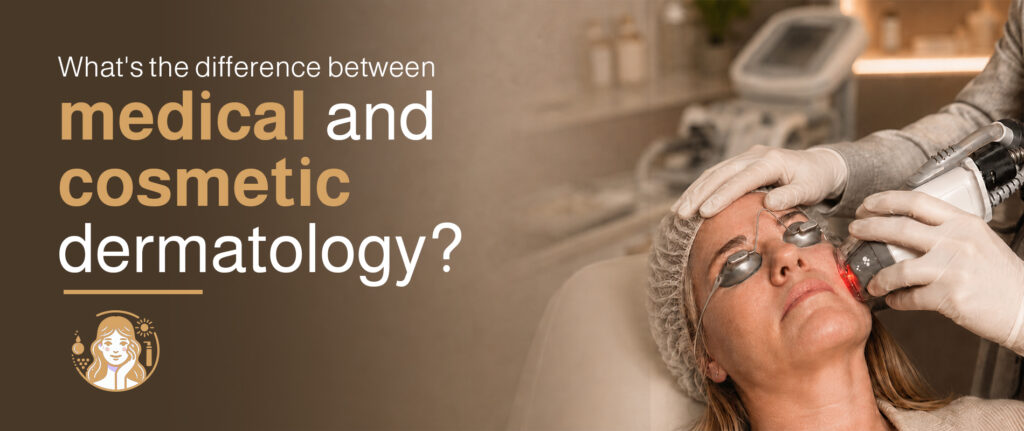
جلدك هو أكبر عضو في جسمك، والحفاظ على صحته يتطلب أكثر من مجرد مظهر جيد. بينما يزور بعض الناس طبيب أمراض جلدية لعلاج حالات مثل حَبُّ الشّبَاب, الإكزيما، أو صدفية، بينما يسعى آخرون للحصول على العلاج للحد من التجاعيد، أو تحسين ملمس البشرة، أو الحصول على مظهر أكثر شباباً. وهنا تبرز أهمية فهم الفرق بين طب الأمراض الجلدية و طب الجلد التجميلي يصبح مهماً.
على الرغم من أن كلا التخصصين يركز على الجلد، إلا أن لكل منهما أهدافاً مختلفة. طب الأمراض الجلدية مُكرَّس لتشخيص وعلاج أمراض الجلدواضطرابات الشعر والأظافر، بينما طب الجلد التجميلي يركز على تحسين مظهر البشرة من خلال علاجات غير جراحية وأخرى تتطلب تدخلاً طفيفاً.
معرفة الفرق بين طب الأمراض الجلدية والتجميل يمكن أن يساعدك في اختيار العلاج المناسب لاحتياجاتك؛ سواء كنت تتعامل مع حالة جلدية مزمنة أو تبحث عن علاجات متطورة تجديد شباب البشرةيشرح هذا الدليل ما يقدمه كل تخصص ومتى يجب عليك زيارة الطبيب. طبيب أمراض جلدية معتمد من المجلس المهني في الرياض.
ما هو طب الجلد العلاجي؟
طب الأمراض الجلدية يركز على تشخيص وعلاج والوقاية من الحالات التي تؤثر على الجلد والشعر والأظافر. وعلى عكس العلاجات التجميلية، فإن هدفه الرئيسي هو تحسين صحتك العامة. صحة البشرة من خلال التعامل مع الحالات الطبية التي قد تؤثر على راحتك وثقتك بنفسك وجودة حياتك.
أ طبيب أمراض جلدية معتمد من المجلس المهني يبدأ بـ... شامل فحص الجلد لتحديد السبب الكامن وراء الأعراض التي تعاني منها. واستناداً إلى التشخيص، يضعون خطة علاجية مخصصة تعتمد على علاجات مثبتة علمياً للسيطرة على الحالة، وتخفيف الأعراض، والوقاية من المضاعفات المستقبلية.
الحالات الجلدية الشائعة التي يتم علاجها
أ طبيب أمراض جلدية يعالج مجموعة واسعة من الأمراض الجلدية، بدءاً من المشاكل الشائعة ووصولاً إلى الأمراض الأكثر تعقيداً. وتشمل هذه: حَبُّ الشّبَاب, الإكزيما, صدفية, العُدّ الوردي, التهاب الجلد, البهاق, الشرى، والعدوى الفطرية، والعدوى الجلدية البكتيرية، واضطرابات الجلد المناعية الذاتية. كما يشمل طب الأمراض الجلدية السريري... تساقط الشعر، وأمراض الأظافر، وحالات فروة الرأس، مع توفير رعاية متخصصة مثل تحليل الشعر ومُخصَّصة علاجات الشعر عند الحاجة.
جزء مهم آخر من طب الأمراض الجلدية is فحص الكشف عن سرطان الجلد. يُشخِّص أطباء الجلدية ويعالجون حالاتٍ مثل سرطان الجلد, سرطان الخلايا القاعديةو التقران السعفي، مما يساعد في الكشف المبكر عن الآفات المشبوهة في المرحلة التي يكون فيها العلاج أكثر فعالية.
الإجراءات الطبية الشائعة في طب الأمراض الجلدية
يعتمد العلاج على التشخيص وشدة الحالة. يتحسن بعض المرضى مع أدوية موضعية أو أدوية تؤخذ عن طريق الفم، في حين قد يحتاج آخرون إلى العلاج بالتبريد, العلاج بالضوء, العلاج البيولوجيأو إجراءات جراحية بسيطة مثل خزعة جلدية.
الهدف من هذه علاجات الأمراض الجلدية الطبية لا يقتصر الهدف على تحسين المظهر، بل يشمل استعادة صحة البشرة، والسيطرة على المرض، وتحسين عافيتك العامة.
ما هو طب الجلد التجميلي؟
حديث طب الجلد التجميلي يجمع بين الخبرة الطبية والتقنيات المتقدمة لتقديم نتائج تبدو طبيعية. تبدأ كل عملية علاجية بجلسة استشارية تتيح لطبيب الجلدية التوصية بالإجراءات المناسبة بناءً على نوع بشرتك، والمشكلات التي تود معالجتها، وأهدافك الجمالية.
مشاكل البشرة التجميلية الشائعة
يختار الناس طب الجلد التجميلي لمعالجة مخاوف مثل خطوط دقيقة، التجاعيد، ندبات حب الشباب, فرط التصبغ، وتفاوت لون البشرة، واتساع المسام، وأضرار أشعة الشمس، وترهل الجلد. وتشمل المخاوف الشائعة الأخرى فقدان حجم الوجه، والبقع العمرية، والبشرة الباهتة التي تفتقر إلى النضارة.
على الرغم من أن هذه المشاكل لا تُعد عادةً حالات طبية، إلا أن تحسين مظهر بشرتك يمكن أن يعزز ثقتك بنفسك ويساعدك على الشعور براحة أكبر تجاه بشرتك.
علاجات الأمراض الجلدية التجميلية الشائعة
اليوم إجراءات طب الجلد التجميلي تُقدم نتائج فعالة مع فترة توقف قصيرة أو معدومة. وتشمل العلاجات الشائعة البوتوكس, فيلر جلدي, التقشير الكيميائي, الوخز بالإبر الدقيقة, العلاج بالبلازما الغنية بالصفائح الدموية (PRP).، ومتقدمة العلاج بالليزر خيارات.
بناءً على المشاكل التي تعاني منها بشرتك، قد يوصي طبيب الجلدية بـ... ليزر جينيسس للاحمرار، تقنية الضوء النبضي المكثف لعلاج التصبغات وأضرار أشعة الشمس، فراكسل أو فراكشنال ليزر لعلاج ندبات حب الشباب وتجديد سطح الجلد، أو البيكو واي لعلاج التصبغات العنيدة. ولشد البشرة وتجديد شباب الوجه، تُستخدم علاجات مثل: جهاز السيكرت مايكرونيدلينغ, الالثيراو تقنية XERF لشد البشرة في الرياض يمكن دمجها لابتكار خطة علاجية مخصصة تحقق نتائج ذات مظهر طبيعي.
الغرض من العلاج
الهدف الرئيسي لـ طب الأمراض الجلدية يهدف هذا إلى تشخيص وعلاج والوقاية من أمراض الجلد والشعر والأظافر التي تؤثر على صحتك. في المقابل، طب الجلد التجميلي يركز على تعزيز مظهر الجلد، والحد من علامات الشيخوخة، وتحسين المظهر الجمالي العام للوجه من خلال علاجات غير جراحية.
أنواع مشاكل البشرة
أ طبيب أمراض جلدية يعالج حالاتٍ مثل حَبُّ الشّبَاب, الإكزيما, صدفية, العُدّ الوردي, سرطان الجلدوالالتهابات، واضطرابات الشعر أو الأظافر. أ طبيب جلدية تجميلية يعالج مشاكل مثل التجاعيد، وآثار حب الشباب، والتصبغات، وتفاوت لون البشرة، واتساع المسام، وارتخاء الجلد، وفقدان حجم الوجه.
طرق العلاج
غالباً ما تشمل العلاجات الطبية الأدوية الموصوفة طبيًا, خزعة جلدية, العلاج بالتبريدو العلاج بالضوء للسيطرة على الأمراض وتحسين صحة الجلد. وتستخدم العلاجات التجميلية إجراءات مثل البوتوكس, فيلر جلدي, التقشير الكيميائي, الوخز بالإبر الدقيقة, العلاج بالبلازما الغنية بالصفائح الدموية (PRP).، ومتقدمة العلاج بالليزر لتجديد حيوية البشرة وتحسين مظهر الوجه.
النتائج المتوقعة
الهدف من علاجات الأمراض الجلدية الطبية يؤدي إلى بشرة أكثر صحة من خلال السيطرة على المرض والوقاية من المضاعفات. علاجات الأمراض الجلدية التجميلية تهدف إلى تحسين ملمس البشرة، واستعادة المظهر الشبابي، وتعزيز توازن ملامح الوجه بنتائج تبدو طبيعية.
فترة التعافي
تختلف فترة التعافي باختلاف العلاج. طب الأمراض الجلدية تتطلب هذه الإجراءات فترة تعافٍ قصيرة، إذ عادةً ما تكون العلاجات التجميلية طفيفة التوغل، مما يتيح لمعظم المرضى العودة إلى روتينهم اليومي بسرعة.
التغطية التأمينية في المملكة العربية السعودية
في المملكة العربية السعوديةالعلاجات الضرورية طبيًا مثل تلك الخاصة بـ سرطان الجلدقد يغطي التأمين الصحي علاج حب الشباب الشديد أو الأمراض الجلدية المزمنة، وذلك حسب وثيقة التأمين الخاصة بك. ومع ذلك، فإن العلاجات الاختيارية طب الجلد التجميلي عموماً، لا تغطي التغطيةُ الإجراءاتِ التي تُجرى فقط لتحسين المظهر.
| ميزة | طب الأمراض الجلدية | طب الجلد التجميلي |
|---|---|---|
الهدف الرئيسي |
تشخيص وعلاج الأمراض الجلدية |
تحسين مظهر البشرة وجماليتها |
يعامل |
حب الشباب، والأكزيما، والصدفية، والوردية، وسرطان الجلد، واضطرابات الشعر والأظافر. |
التجاعيد، التصبغات، ندبات حب الشباب، فقدان الحجم، ترهل الجلد |
العلاجات الشائعة |
الأدوية الموصوفة طبيًا، وخزعة الجلد، والعلاج بالتبريد، والعلاج الضوئي. |
البوتوكس، حشوات الجلد، العلاج بالليزر، الوخز بالإبر الدقيقة، التقشير الكيميائي، علاج البلازما الغنية بالصفائح الدموية |
التركيز الرئيسي |
إدارة الصحة والمرض |
تجديد حيوية البشرة والتحسين التجميلي |
تأمين |
غالباً ما تكون مشمولة بالتغطية إذا كانت ضرورية طبياً. |
عادةً ما تُعتبر اختيارية وغير مشمولة بالتغطية. |
هل يمكن الجمع بين طب الأمراض الجلدية العلاجي والتجميلي؟
نعم. في كثير من الحالات، تأتي أفضل النتائج من الجمع بين طب الأمراض الجلدية والتجميل. على سبيل المثال، نشط حَبُّ الشّبَاب ينبغي أولاً علاج حب الشباب طبياً قبل إجراء أي عمليات لتحسين ندبات حب الشباب أو التصبغات. وبالمثل، فإن السيطرة على حب الشباب أمر ضروري. العُدّ الوردي يساعد استخدامه قبل العلاج التجميلي على تقليل الاحمرار وتحسين النتائج على المدى الطويل.
تتيح خطة العلاج المخصصة لطبيب الجلدية تحسين كليهما صحة البشرة ...والمظهر بأمان. وغالباً ما يؤدي الجمع بين الرعاية الطبية والإجراءات التجميلية المتقدمة إلى نتائج أكثر طبيعية وتدوم لفترة أطول.
كيف تعرف نوع العلاج الجلدي الذي تحتاجه
يعتمد الخيار الصحيح على المشكلة الجلدية التي تعاني منها. فإذا كنت تعاني من حب الشباب المستمر، أو الطفح الجلدي، أو الحكة، أو تساقط الشعر، أو الشامات المثيرة للريبة، أو حالات مزمنة مثل... الإكزيما, صدفية، أو العُدّ الوردي، ينبغي أن ترى طبيب أمراض جلدية.
إذا كان هدفك هو الحصول على بشرة أكثر نعومة، أو تقليل التجاعيد، أو تحسين لون البشرة، أو تجديد شباب الوجه، طب الجلد التجميلي هو الخيار الأفضل. وأثناء جلسة الاستشارة، سيقوم طبيب الأمراض الجلدية بفحص بشرتك واقتراح خطة العلاج الأنسب بناءً على احتياجاتك.
اختيار طبيب الأمراض الجلدية المناسب في الرياض
اختيار شخص ذي خبرة طبيب أمراض جلدية معتمد من المجلس المهني تُعد واحدة من أهم الخطوات للحصول على بشرة صحية. ابحث عن عيادة تقدم كليهما. طب الأمراض الجلدية و طب الجلد التجميلي، وبذلك يمكنك الحصول على رعاية متكاملة في مكان واحد إذا تغيرت احتياجاتك بمرور الوقت.
يخصص طبيب الجلدية المتميز وقتاً لفهم مخاوفك، وشرح خيارات العلاج المتاحة، ووضع خطة مخصصة لحالتك بدلاً من التوصية بإجراءات غير ضرورية. وغالباً ما توفر العيادات المجهزة بأحدث التقنيات والعلاجات القائمة على الأدلة العلمية إجراءات أكثر أماناً ونتائج أفضل على المدى الطويل.
لماذا تختار عيادات "ريفيل" (Reveal Clinics) لطب الجلدية والتجميل في الرياض؟
في عيادة ريڤيل، فإننا نقدم خدمات شاملة طب الأمراض الجلدية والتجميل خدمات مصممة خصيصًا لتلبية أهداف كل مريض فيما يتعلق ببشرته. سواء كنت بحاجة إلى علاج لـ حَبُّ الشّبَاب, العُدّ الوردي...تساقط الشعر أو التصبغات أو علامات الشيخوخة، حيث يضع أطباء الجلدية لدينا -من ذوي الخبرة- خططاً علاجية مخصصة باستخدام أحدث التقنيات.
تقدم عيادتنا علاجات متطورة تشمل ليزر جينيسس, تقنية الضوء النبضي المكثف, فراكسل, فراكشنال ليزر, البيكو واي, جهاز السيكرت مايكرونيدلينغ, الالثيراو تقنية XERF لشد البشرة في الرياض. كما نستخدم تقنيات حديثة الأجهزة القائمة على الطاقة لعلاج التصبغات، وآثار حب الشباب، والمشاكل الوعائية، وترهل الجلد، وتجديد حيوية البشرة بشكل عام، مما يساعد المرضى في الحصول على بشرة أكثر صحة تمنحهم شعوراً أكبر بالثقة.
الأسئلة الشائعة (FAQ)
هل يُصنَّف حب الشباب ضمن طب الأمراض الجلدية العلاجي أم التجميلي؟
نشيط حَبُّ الشّبَاب يُعالج بموجب طب الأمراض الجلدية لأنها حالة جلدية؛ فبمجرد السيطرة على حب الشباب، يمكن استخدام العلاجات التجميلية لتحسين مظهر ندبات حب الشباب أو التصبغات.
ما هي مخاطر طب الجلد التجميلي؟
معظم إجراءات طب الجلد التجميلي تُعد آمنة عند إجرائها على يد طبيب أمراض جلدية مؤهل. وتُعد الاحمرار المؤقت، أو التورم، أو الكدمات الخفيفة أكثر الآثار الجانبية شيوعاً.
هل طب الجلد التجميلي هو نفسه طب الجلد العلاجي؟
لا طب الأمراض الجلدية يركز على تشخيص وعلاج الأمراض الجلدية، بينما طب الجلد التجميلي صُمم لتحسين مظهر البشرة الصحية من خلال الإجراءات التجميلية.
ما هي الحالات الجلدية التي تتطلب رعاية طبية متخصصة في الأمراض الجلدية؟
حالات مثل الإكزيما, صدفية, العُدّ الوردي, سرطان الجلد, البهاقتتطلب حالات العدوى والتهاب الجلد المزمن تقييماً وعلاجاً من قِبَل طبيب أمراض جلدية.
هل علاجات الأمراض الجلدية التجميلية آمنة؟
نعم. علاجات مثل البوتوكس, فيلر جلدي, العلاج بالليزرو الوخز بالإبر الدقيقة تكون آمنة بشكل عام عند إجرائها بواسطة ذوي الخبرة أخصائيون في الأمراض الجلدية والطب التجميلي.
هل يمكن لطبيب جلدية واحد تقديم كل من العلاجات الطبية والتجميلية؟
نعم. الكثير أطباء أمراض جلدية معتمدون من المجلس مُدرَّبون على كليهما طب الأمراض الجلدية و طب الجلد التجميلي، مما يتيح لهم علاج الأمراض الجلدية وتقديم الإجراءات التجميلية في آنٍ واحد.
هل يغطي التأمين علاجات الأمراض الجلدية التجميلية في المملكة العربية السعودية؟
في معظم الحالات، تُعتبر الإجراءات التجميلية اختيارية ولا يغطيها التأمين الصحي. الضرورية طبياً جلدي قد تكون العلاجات مشمولة بالتغطية، وذلك يعتمد على وثيقة التأمين الخاصة بك.
أي نوع من تخصصات الأمراض الجلدية يناسبني؟
إذا كانت المشكلة التي تواجهها تؤثر على صحة بشرتك أو تسبب أعراضاً مستمرة، فمن المرجح أنك بحاجة إلى... طب الأمراض الجلديةإذا كان هدفك هو تحسين المظهر أو تقليل علامات الشيخوخة، طب الجلد التجميلي عادةً ما يكون الخيار الأفضل. ويمكن أن تساعد استشارة طبيب الأمراض الجلدية في تحديد خطة العلاج الأنسب.
خاتمة
فهم الفرق بين طب الجلد العلاجي وطب الجلد التجميلي يساعدك على اختيار العناية المناسبة لبشرتك. طب الأمراض الجلدية يركز على تشخيص وعلاج أمراض الجلد، بينما طب الجلد التجميلي يُعزِّز مظهر الجلد من خلال علاجات متطورة تتسم بكونها طفيفة التوغل. ويتمتع كلا التخصصين بأهمية متساوية، وغالباً ما يعملان معاً للحصول على بشرة أكثر صحة ومظهراً يبعث على الثقة.
في عيادة ريڤيليقدم أطباء الجلدية ذوو الخبرة لدينا رعاية مخصصة للحالات الطبية والتجميلية على حد سواء، وذلك باستخدام تقنيات متطورة وعلاجات قائمة على الأدلة العلمية؛ وسواء كنت بحاجة إلى علاج لحالة جلدية مزمنة أو ترغب في تحسين مظهر بشرتك باستخدام أحدث التقنيات... العناية بالبشرة والجمال ...الإجراءات، نحن هنا لمساعدتك في الحصول على بشرة صحية وجميلة، مع نتائج تبدو طبيعية.