
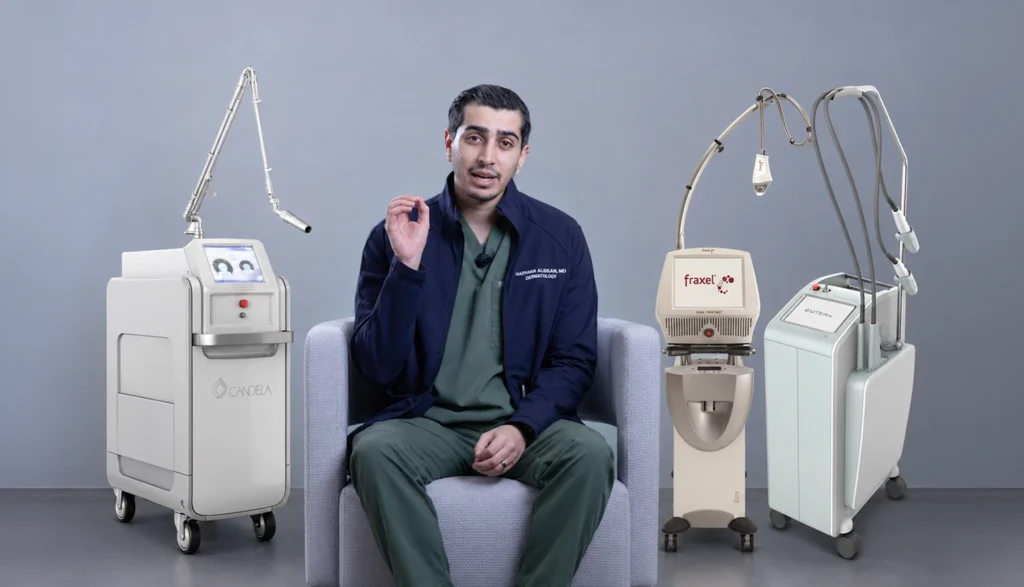
فراكسل يُعد واحداً من أكثر علاجات الليزر بحثاً من قِبَل المرضى الساعين للحصول على بشرة أكثر صحة ونعومة وتجانساً في المظهر، وغالباً ما تتم مقارنته بـ... بيكو واي و + الاكسل ڤي...إذ صُممت كل تقنية من هذه التقنيات المتقدمة لمعالجة مشكلة جلدية مختلفة. ورغم أن التقنيات الثلاث تعتمد على طاقة الليزر المركّزة، إلا أنها لا تعمل بالطريقة نفسها؛ فاعتماداً على الجهاز المستخدم، يتم توجيه تلك الطاقة نحو الكولاجين أو الصبغات أو الأوعية الدموية الموجودة تحت سطح الجلد.
الدكتور هيثم القزلان يؤكد الدكتور هيثم القزلان أنه لا يوجد نوع واحد من الليزر — سواء كان "فراكسل" (Fraxel) أو "بيكو" (Pico) أو "إكسيل في" (Excel V) — يحقق النتائج ذاتها بفعالية متساوية لدى جميع المرضى أو لجميع حالات البشرة. وتتمثل نقطة الانطلاق الصحيحة دائمًا في إجراء تقييم شامل للبشرة لتحديد السبب الفعلي للمشكلة، ومراعاة نوع البشرة، ومن ثم تصميم خطة علاجية مخصصة لكل مريض على حدة. إن فهم الدور المميز الذي يؤديه كل نوع من أنواع الليزر هذه يساعد المرضى على اتخاذ قرارات مدروسة وتكوين توقعات واقعية قبل البدء في العلاج.
ما الذي يجعل اختيار الليزر أمراً مهماً؟
شهدت تقنية الليزر تطوراً ملحوظاً خلال العقد الماضي، مما أتاح لأطباء الجلدية علاج مجموعة واسعة من المشاكل التجميلية للبشرة بمستوى أعلى من الدقة والأمان. ومع ذلك، فإن كل جهاز ليزر مصمم لغرض محدد؛ فبعضها يستهدف التصبغات، والبعض الآخر يحفز إنتاج الكولاجين، بينما تركز أجهزة معينة على الأوعية الدموية الظاهرة والاحمرار.
يعتمد اختيار الليزر المناسب على عدة عوامل، منها:
- نوع بشرتك ولونها
- الحالة التي يتم علاجها
- عمق مشكلة البشرة
- الإجراءات التجميلية السابقة
- نمط الحياة والتعرض لأشعة الشمس
- توقعات التعافي
- النتيجة العلاجية المرجوة
يساعد اختيار نوع الليزر المناسب على تعظيم النتائج، مع تقليل فترات التوقف غير الضرورية والحد من مخاطر حدوث مضاعفات. كما تضمن لك الاستشارة المهنية أن يستند العلاج إلى الخصائص الفريدة لبشرتك، بدلاً من اتباع الاتجاهات أو التوصيات العامة.
فهم التقنيات فراكسل وبيكو واكسل في
بالرغم من فراكسل، وبيكو، وإكسل في تُعد جميعها تقنيات تعتمد على الليزر، إلا أنها تعمل بطرق مختلفة وصُممت لمعالجة مشكلات متنوعة.
فراكسل هو ليزر تجزيئي (Fractional Laser) يُحدث مناطق علاجية مجهرية داخل الجلد. وتعمل هذه الإصابات الدقيقة والمضبوطة على تحفيز إنتاج الكولاجين وتعزيز عملية التئام الجلد الطبيعية، مما يجعل تقنية "فراكسل" (Fraxel) خياراً ممتازاً لتحسين ملمس البشرة، وعلاج ندبات حب الشباب، ومعالجة علامات الشيخوخة.
ليزر بيكو تستخدم نبضات فائقة القصر بمقياس "البيكو ثانية" لتفتيت جزيئات الصبغة دون توليد حرارة مفرطة. وتُستخدم هذه التقنية على نطاق واسع لعلاج النمش، وبقع الشمس، وفرط التصبغ، وآثار أحبار الوشم، وتفاوت لون البشرة، مع تعزيز تجدد البشرة بشكل عام.
+ الاكسل ڤي هو ليزر وعائي يستهدف على وجه التحديد الأوعية الدموية غير الطبيعية الموجودة تحت الجلد. وبدلاً من التركيز على التصبغات أو ملمس البشرة، يُستخدم هذا الليزر عادةً لعلاج احمرار الوجه، والوردية، والعروق العنكبوتية، وتوسع الشعيرات الدموية، وغيرها من المشكلات الوعائية.
يؤدي كل نوع من أنواع الليزر غرضاً مختلفاً؛ ولهذا السبب يوصي طبيب الجلدية بالعلاج بناءً على الحالة المحددة، بدلاً من اختيار جهاز لمجرد أنه أحدث أو أكثر شيوعاً.
جدول بين وفراكسل وبيكو واكسل في
| ميزة | ليزر فراكسل | بيكو ليزر | ليزر اكسل |
|---|---|---|---|
أفضل ل |
ندبات حب الشباب، التجاعيد، المسام الواسعة، تجديد سطح البشرة |
التصبغات، النمش، البقع الداكنة، إزالة الوشم |
الوردية، احمرار الوجه، الشعيرات الدموية المتمزقة، الأوردة العنكبوتية |
الهدف الرئيسي |
إعادة تشكيل الكولاجين وملمس البشرة |
جزيئات الصبغة |
الأوعية الدموية |
التكنولوجيا |
فراشكنال ليزر |
ليزر البيكو |
ليزر الاوعيه الدمويه |
تحفيز الكولاجين |
ممتاز |
جيد جدا |
معتدل |
يعالج ندبات حب الشباب |
ممتاز |
قد يحسن التصبغات بعد ظهور حب الشباب |
غير محدد بشكل أساسي |
يعالج التصبغات |
جيد |
ممتاز |
محدود |
يعالج الاحمرار والوردية |
✖ |
✖ |
ممتاز |
يعالج الأوردة الظاهرة |
✖ |
✖ |
ممتاز |
إزالة الوشم |
✖ |
ممتاز |
✖ |
التوقف |
متوسط (3-7 أيام) |
الحد الأدنى (1-3 أيام) |
الحد الأدنى (1-2 يوم) |
الجلسات النموذجية |
3–5 |
2–6 |
2–4 |
تُظهر المقارنة أن هذه التقنيات تكمل بعضها البعض بدلاً من أن تحل محل بعضها؛ إذ يركز نظام "Fraxel" على تحسين جودة البشرة من خلال تحفيز إنتاج الكولاجين، بينما يتخصص نظام "Pico" في معالجة مشاكل التصبغ، وصُمم نظام "Excel V" لعلاج الحالات الوعائية. ويعتمد الخيار الأمثل على التشخيص الدقيق ووضع خطة علاجية مخصصة لكل حالة.
ليزر فراكسل: الخيارات المتاحة الآن ملمس البشرة، أسباب الندبات، وشكل الجلد الجديد.
فراكسل هي تقنية ليزر تجزيئية رائدة تُنشئ آلاف الأعمدة العلاجية المجهرية، مما يُحفز استجابة الجلد الطبيعية للشفاء مع الحفاظ على سلامة الأنسجة المحيطة، وهو ما يُعزز إعادة بناء الكولاجين وتجديده مع فترة نقاهة أقصر من علاجات تجديد سطح الجلد الكاملة. تُستخدم هذه التقنية عادةً لعلاج حب الشباب وندبات العمليات الجراحية، والخطوط الدقيقة والتجاعيد، والمسام الواسعة، وخشونة ملمس البشرة، وأضرار أشعة الشمس، والتصبغات الخفيفة، وعلامات الشيخوخة المبكرة. تظهر النتائج تدريجيًا على مدى عدة أسابيع مع تكوّن الكولاجين الجديد، مما يُحسّن ملمس البشرة، ومرونتها، ومظهرها العام، بدلاً من إحداث تغيير فوري. يختلف عدد الجلسات المطلوبة بناءً على شدة المشكلة والنتيجة المرجوة للمريض.
ليزر "بيكو" (Pico Laser) هو الخيار الأمثل لعلاج التصبغات والبقع الداكنة وإزالة أحبار الوشم.
تأثير (بدلاً من الحرارة) لتفتيت الصبغة إلى جزيئات دقيقة يتخلص منها الجسم بشكل طبيعي. ويؤدي ذلك إلى تقليل...
تلف أقل في الأنسجة وفترة تعافٍ أقصر مقارنةً بليزر التصبغات التقليدي. ويُستخدم عادةً لعلاج بقع الشمس.
النمش، فرط التصبغ بقع الشيخوخة، تفاوت لون البشرة، آثار ما بعد الالتهاب، أنواع معينة من التصبغات
النمش، فرط التصبغ بقع الشيخوخة، تفاوت لون البشرة، آثار ما بعد الالتهاب، أنواع معينة من التصبغات
تختلف الحاجة باختلاف نوع التصبغ وعمقه ونوع البشرة، لذا يُنصح باستشارة طبيب جلدية.يُنصح باستشارة طبيب جلدية.
إعداد خطة علاجية مخصصة.
ليزر Excel V: الخيار الأمثل لعلاج الاحمرار والأوردة والمشاكل الوعائية.
تُعد تقنية الليزر "Excel V" حلاً مصمماً خصيصاً لعلاج المشاكل الوعائية؛ إذ تعمل من خلال استهداف الهيموغلوبين الموجود داخل الأوعية الدموية غير الطبيعية لمعالجة الأوردة الظاهرة بشكل انتقائي، مع الحفاظ على سلامة الجلد المحيط بها إلى حد كبير. وتُستخدم هذه التقنية عادةً لعلاج حالات مثل الوردية، واحمرار الوجه المستمر، وتوسع الشعيرات الدموية، والأوردة العنكبوتية، والأورام الوعائية الكرزية، واحمرار الوجه المنتشر، والآفات الوعائية الصغيرة. وتنشأ العديد من هذه الحالات نتيجة تضخم الأوعية الدموية الدقيقة أو ازدياد وضوحها تحت سطح الجلد؛ لذا يساعد "Excel V" -عبر استهداف هذه الأوعية مباشرة- في تقليل ظهورها، مما يمنح البشرة تدريجياً مظهراً أكثر صفاءً وتجانساً. ونظراً لاختلاف شدة الحالات الوعائية، يتم تصميم خطط العلاج بما يتناسب مع حالة كل مريض؛ إذ قد يلاحظ البعض تحسناً بعد جلسة واحدة فقط، بينما قد يحتاج آخرون إلى عدة جلسات للحصول على أفضل النتائج.
أي نوع من الليزر هو الأنسب لمشكلة بشرتك؟
ندبات حب الشباب
يُعد فهم السبب الكامن وراء مشكلة بشرتك الخطوة الأولى لاختيار العلاج بالليزر المناسب؛ إذ صُممت تقنيات مختلفة لاستهداف هياكل متنوعة داخل الجلد، مما يجعل التقييم المهني أمراً ضرورياً. وغالباً ما يُنصح باستخدام تقنية "فراكسل" (Fraxel) لعلاج ندبات حب الشباب، نظراً لقدرتها على تحفيز إعادة تشكيل الكولاجين تحت سطح الجلد، مما يساعد في تحسين ملمس البشرة غير المستوي وتخفيف حدة الندبات الغائرة بمرور الوقت. أما إذا خلّف حب الشباب بقعاً داكنة أو تصبغات تالية للالتهاب، فقد يُستخدم ليزر "بيكو" (Pico) لتحسين لون البشرة وتوحيد مظهرها، وذلك بعد زوال نشاط حب الشباب.
تصبغات
قد تنتج التصبغات عن التعرض لأشعة الشمس، أو التقدم في العمر، أو الالتهابات، أو عوامل أخرى. ويُعد ليزر "بيكو" (Pico laser) خياراً شائعاً لعلاج النمش، وبقع الشيخوخة، والبقع الشمسية، وفرط التصبغ؛ نظراً لقدرته على استهداف الصبغة بدقة مع تقليل الأضرار الناجمة عن الحرارة إلى أدنى حد.
قد يعمل علاج "فراكسل" (Fraxel) أيضاً على تحسين التصبغات الناجمة عن أضرار أشعة الشمس، مع تعزيز ملمس البشرة وجودتها العامة في آنٍ واحد.
الاحمرار والوردية
عادةً ما ينجم الاحمرار المستمر في الوجه عن توسع الأوعية الدموية وليس عن فرط التصبغ. وقد صُمم نظام "Excel V" خصيصاً لعلاج الحالات الوعائية - مثل الوردية، والشعيرات الدموية المتمزقة، والأوردة الظاهرة في الوجه - مما يجعله الخيار المفضل للعديد من المرضى الذين يعانون من احمرار مزمن.
ما يمكن توقعه أثناء العلاج
قبل العلاج
يبدأ كل إجراء بالليزر بجلسة استشارية شاملة لتقييم حالة بشرتك وتاريخك الطبي وأهدافك العلاجية. وبناءً على هذا التقييم، يضع طبيب الجلدية خطة علاجية مخصصة لك.
قد يشمل الإعداد ما يلي:
- الحد من التعرض لأشعة الشمس.
- اتباع روتين لطيف للعناية بالبشرة.
- تجنب المنتجات التي قد تزيد من حساسية البشرة، وذلك في حال نصحك طبيب الجلدية بذلك.
أثناء العلاج
يتم تنظيف المنطقة المراد علاجها وتوفير نظارات واقية. واعتماداً على الإجراء، قد يتم تطبيق مخدر موضعي لتعزيز الشعور بالراحة.
بعد ذلك، يتم تمرير أداة الليزر اليدوية فوق المنطقة المراد علاجها، مما يوصل طاقةً مُحكَّمةً إلى الأنسجة المستهدفة. وتستغرق معظم الجلسات ما بين 20 و45 دقيقة تقريباً، وذلك حسب مساحة المنطقة المعالجة.
غالباً ما يصف المرضى هذا الإحساس بأنه شعور بدفء خفيف، أو وخز، أو شعور بفرقعة خفيفة على الجلد..
التعافي والرعاية اللاحقة
تختلف فترة التعافي باختلاف تقنية الليزر المستخدمة وشدة العلاج.
عادةً ما يتضمن علاج "فراكسل" (Fraxel) استمرار الاحمرار وتورمٍ طفيف وتقشيرٍ مؤقت لبضعة أيام، وذلك بالتزامن مع تكون بشرة جديدة.
عادةً ما يتطلب ليزر "بيكو" (Pico laser) فترة تعافٍ قصيرة جداً، حيث يقتصر الأمر على احمرار مؤقت أو حساسية خفيفة غالباً ما تزول خلال فترة وجيزة.
قد يتسبب جهاز Excel V في احمرار مؤقت أو تورم طفيف حول الأوعية الدموية المعالجة، قبل أن تتحسن الحالة تدريجياً.
قد يتسبب جهاز Excel V في تورم مؤقت أو تورم في الأوعية الدموية الدماغية، قبل أن تتحسن الحالة.
- استخدم واقياً من الشمس واسع الطيف يومياً.
- تجنب التعرض الطويل لأشعة الشمس.
- استخدم منظفات ومرطبات لطيفة.
- تجنبي منتجات التقشير القاسية حتى تتعافى البشرة تماماً.
- يجب اتباع جميع التعليمات الخاصة بمرحلة ما بعد العلاج والتي يقدمها طبيب الأمراض الجلدية.
تساعد العناية اللاحقة المنتظمة في حماية البشرة وتساهم في تحقيق نتائج علاجية تدوم طويلاً.
من يجب عليهم تجنب العلاج بالليزر؟
على الرغم من أن إجراءات الليزر مناسبة للعديد من الأفراد، إلا أنها قد لا تكون ملائمة في حالات معينة.
قد يلزم تأجيل العلاج أو تعديله للمرضى الذين يعانون من:
- قد يتطلب العلاج أو تعديل المرضى الذين يعانون من:
- جروح مفتوحة في منطقة العلاج.
- جروح مفتوحة في منطقة العلاج.
- بعض الأدوية المسببة للحساسية للضوء.
- حالات طبية غير مضبوطة
خلال جلسة الاستشارة، سيقوم طبيب الأمراض الجلدية بمراجعة تاريخك الطبي وحالة بشرتك لتحديد ما إذا كان العلاج بالليزر مناسباً أم أن هناك نهجاً بديلاً أكثر ملاءمة.
الأسئلة الشائعة (FAQ)
هل تقنية فراكسل أفضل من تقنية بيكو ليزر؟
ليس بالضرورة؛ إذ يُستخدم "فراكسل" (Fraxel) عادةً لتحسين مظهر ندبات حب الشباب وملمس البشرة وعلامات الشيخوخة، بينما صُمم ليزر "بيكو" (Pico) في المقام الأول لمعالجة مشاكل التصبغ وإزالة الوشم. ويعتمد الخيار الأفضل على حالة بشرتك.
هل يمكن الجمع بين تقنيات Fraxel وPico وExcel V؟
نعم. في بعض الحالات، قد تُستخدم تقنيات ليزر متنوعة كجزء من خطة علاجية مخصصة لمعالجة مشكلات متعددة، مثل التصبغات وملمس البشرة والاحمرار.
هل يمكن الجمع بين تقنيات Fraxel وPico وExcel V؟
نعم. في بعض الحالات، قد تُستخدم تقنيات ليزر متنوعة كجزء من خطة علاجية مخصصة لمعالجة مشكلات متعددة، مثل التصبغات وملمس البشرة والاحمرار.
هل العلاج بالليزر مؤلم؟
تُعد معظم علاجات الليزر مقبولة جيداً؛ واعتماداً على الإجراء المتبع، قد تُستخدم تقنية التبريد أو التخدير الموضعي لتعزيز راحة المريض.
متى سألاحظ النتائج؟
قد تصبح بعض التحسّنات - مثل تراجع التصبّغ أو الاحمرار - ملحوظةً في غضون بضعة أسابيع. أما العلاجات التي تحفّز إنتاج الكولاجين، مثل تقنية "فراكسل" (Fraxel)، فعادةً ما تؤدي إلى تحسّن تدريجي على مدار عدة أشهر مع قيام البشرة بتجديد نفسها طبيعياً.
هل هذه الليزرات مناسبة لجميع أنواع البشرة؟
يمكن استخدام العديد من تقنيات الليزر الحديثة بأمان على مجموعة واسعة من أنواع البشرة عند اختيارها بشكل مناسب. ويساعد التقييم المهني للبشرة في تحديد العلاج الأكثر أماناً وفعالية لكل فرد.
خاتمة
فهم الاختلافات بين فراكسل، بيكو، و + الاكسل ڤي يساعد ذلك المرضى على اتخاذ قرارات مستنيرة بشأن علاجات البشرة بالليزر. ورغم أن جميع هذه التقنيات تعتمد على طاقة الليزر، إلا أنها صُممت لمعالجة مشكلات مختلفة؛ إذ يُستخدم "فراكسل" (Fraxel) عادةً لتحسين ملمس البشرة وعلاج ندبات حب الشباب وآثار الشيخوخة من خلال تحفيز إنتاج الكولاجين، بينما يركز ليزر "بيكو" (Pico) على معالجة التصبغات والبقع الداكنة والنمش وإزالة الوشم باستخدام نبضات ليزر فائقة القصر. وفي الوقت نفسه، طُوِّرت تقنية "إكسل في" (Excel V) خصيصاً لعلاج الاحمرار والوردية وتوسع الشعيرات الدموية وغيرها من المشكلات الوعائية.
بدلاً من التساؤل عن أكثر أنواع الليزر تطوراً، يكمن السؤال الأهم في تحديد النوع الأنسب لحالة بشرتك؛ إذ تلعب عوامل عدة - مثل نوع البشرة، والمسبب الرئيسي للمشكلة، وتوقعات فترة التعافي، وأهداف العلاج طويلة الأمد - دوراً جوهرياً في اختيار التقنية الملائمة.
يؤكد الدكتور هيثم القزلان أن نجاح العلاج بالليزر يبدأ بالتشخيص الدقيق ووضع خطة علاجية مخصصة؛ إذ تتيح الاستشارة الشاملة اختيار نوع الليزر الأنسب لاحتياجاتك الفردية، مما يساعدك في الحصول على بشرة أكثر صحة ونقاءً وتوازناً، مع الحفاظ على توقعات واقعية وإعطاء الأولوية لصحة البشرة على المدى الطويل.