
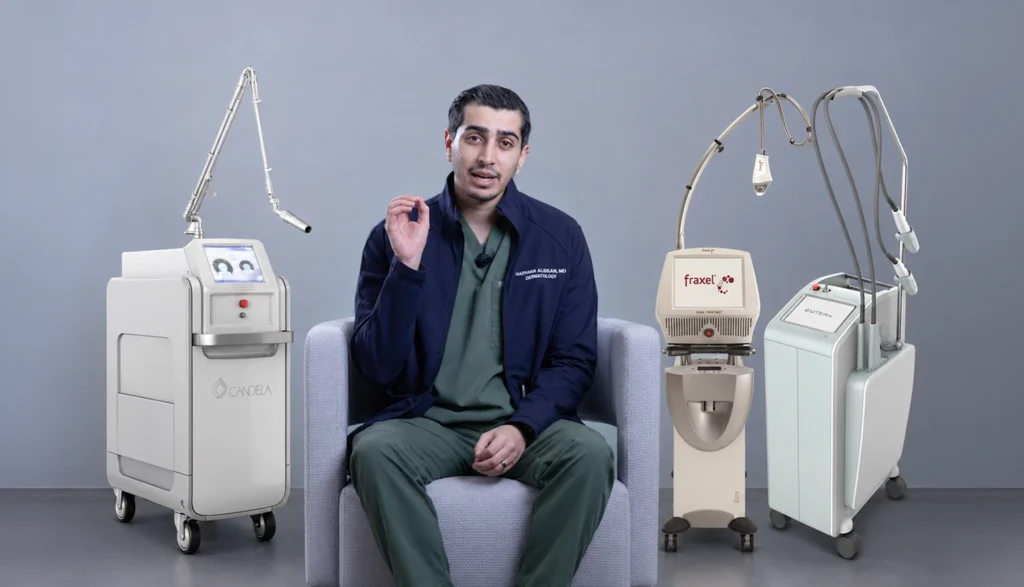
Fraxel is one of the most frequently searched laser treatments for patients looking to achieve healthier, smoother, and more even-looking skin — often compared against Pico and Excel V, since each of these advanced technologies is built to address a different skin concern. All three rely on focused laser energy, but they don’t work the same way: depending on the device, that energy is directed at collagen, pigment, or blood vessels beneath the surface.
Dr. Haitham Al-Gzlan emphasizes that no single laser — including Fraxel, Pico, or Excel V — works equally well for every patient or every skin condition. The right starting point is always a thorough skin assessment that identifies what’s actually causing the concern, accounts for skin type, and shapes a treatment plan around the individual. Understanding the distinct role each of these lasers plays helps patients make better-informed decisions and set realistic expectations before treatment begins.
What Makes Laser Selection Important?
Laser technology has advanced significantly over the past decade, allowing dermatologists to treat a wide range of cosmetic skin concerns with greater precision and safety. However, each laser is designed with a specific purpose in mind. Some target pigmentation, others stimulate collagen production, while certain devices focus on visible blood vessels and redness.
Choosing the right laser depends on several factors, including:
- Your skin type and tone
- The condition being treated
- The depth of the skin concern
- Previous cosmetic procedures
- Lifestyle and sun exposure
- Recovery expectations
- Desired treatment outcome
Selecting the appropriate laser helps maximize results while minimizing unnecessary downtime and reducing the risk of complications. A professional consultation ensures that treatment is based on your skin’s unique characteristics rather than following general trends or recommendations.
Understanding Fraxel, Pico, and Excel V
Although Fraxel, Pico, and Excel V are all laser-based technologies, they work in different ways and are designed to address different concerns.
Fraxel is a fractional laser that creates microscopic treatment zones within the skin. These tiny controlled injuries stimulate collagen production and encourage the skin’s natural healing process, making Fraxel an excellent choice for improving texture, acne scars, and signs of aging.
Pico laser uses ultra-short picosecond pulses to break down pigment particles without generating excessive heat. This technology is widely used for treating freckles, sun spots, hyperpigmentation, tattoo ink, and uneven skin tone while promoting overall skin rejuvenation.
Excel V is a vascular laser that specifically targets abnormal blood vessels beneath the skin. Rather than focusing on pigmentation or texture, it is commonly used to treat facial redness, rosacea, spider veins, broken capillaries, and other vascular concerns.
Each laser serves a different purpose, which is why a dermatologist recommends treatment based on the specific condition rather than choosing a device simply because it is newer or more popular.
Fraxel vs Pico vs Excel V: Comparison Table
| Feature | Fraxel Laser | Pico Laser | Excel V Laser |
|---|---|---|---|
Best For |
Acne scars, wrinkles, enlarged pores, skin resurfacing |
Pigmentation, freckles, dark spots, tattoo removal |
Rosacea, facial redness, broken capillaries, spider veins |
Primary Target |
Collagen remodeling and skin texture |
Pigment particles |
Blood vessels |
Technology |
Fractional laser |
Picosecond laser |
Vascular laser |
Collagen Stimulation |
Excellent |
Very Good |
Moderate |
Treats Acne Scars |
Excellent |
May improve post-acne pigmentation |
Not primarily indicated |
Treats Pigmentation |
Good |
Excellent |
Limited |
Treats Redness & Rosacea |
✖ |
✖ |
Excellent |
Treats Visible Veins |
✖ |
✖ |
Excellent |
Tattoo Removal |
✖ |
Excellent |
✖ |
Downtime |
Moderate (3–7 days) |
Minimal (1–3 days) |
Minimal (1–2 days) |
Typical Sessions |
3–5 |
2–6 |
2–4 |
The comparison shows that these technologies complement rather than replace one another. Fraxel focuses on rebuilding skin quality through collagen stimulation, Pico specializes in pigment-related concerns, and Excel V is designed to treat vascular conditions. The best choice depends on an accurate diagnosis and an individualized treatment plan.
Fraxel Laser Best for Texture, Scars, and Skin Resurfacing
Fraxel is a leading fractional laser technology that creates thousands of microscopic treatment columns, triggering the skin’s natural healing response while leaving surrounding tissue intact, which promotes collagen remodeling and renewal with shorter recovery than full resurfacing treatments. It’s commonly used to address acne and surgical scars, fine lines and wrinkles, enlarged pores, rough texture, sun damage, mild pigmentation, and early signs of aging. Results build gradually over several weeks as new collagen forms, improving skin texture, firmness, and overall appearance rather than producing an instant change. The number of sessions needed varies based on the severity of the concern and the patient’s desired outcome.
Pico Laser Best for Pigmentation, Dark Spots, and Tattoo Ink
effect (rather than heat) to shatter pigment into tiny particles that the body naturally clears. This results in less
tissue damage and shorter downtime compared to traditional pigment lasers. It’s commonly used for sun spots
freckles, hyperpigmentation age spots, uneven skin tone, post-inflammatory marks, certain pigmentation
disorders, and tattoo removal, while also boosting collagen for improved skin texture. The number of sessions
needed varies by pigmentation type, depth, and skin type, so a dermatologist consultation is recommended to
create a tailored treatment plan.
Excel V Laser Best for Redness, Veins, and Vascular Concerns
Excel V is a laser technology specifically designed to treat vascular concerns, working by targeting hemoglobin within abnormal blood vessels to selectively treat visible veins while leaving surrounding skin largely unaffected. It’s commonly recommended for rosacea, persistent facial redness, broken capillaries, spider veins, cherry angiomas, diffuse facial flushing, and small vascular lesions. Many of these conditions develop when tiny blood vessels become enlarged or more visible beneath the skin’s surface. By targeting these vessels directly, Excel V helps reduce their appearance, gradually creating a clearer, more even complexion. Since vascular conditions vary in severity, treatment plans are tailored to each patient. Some see improvement after just one session, while others may need multiple treatments for optimal results.
Which Laser Is Right for Your Skin Concern?
Acne Scars
Understanding the cause of your skin concern is the first step in selecting the appropriate laser treatment. Different technologies are designed to target different structures within the skin, making a professional assessment essential. Fraxel is often recommended for acne scars because it stimulates collagen remodeling beneath the skin, helping improve uneven texture and soften depressed scars over time. If acne has also left behind dark marks or post-inflammatory pigmentation, Pico laser may be used to improve skin tone once active acne has resolved.
Pigmentation
Pigmentation can result from sun exposure, aging, inflammation, or other factors. Pico laser is commonly selected for treating freckles, age spots, sun spots, and hyperpigmentation because it precisely targets pigment while minimizing heat-related damage.
Fraxel may also improve pigmentation associated with sun damage while simultaneously enhancing skin texture and overall skin quality.
Redness and Rosacea
Persistent facial redness is usually caused by enlarged blood vessels rather than excess pigment. Excel V is specifically designed to treat vascular conditions such as rosacea, broken capillaries, and visible facial veins, making it the preferred option for many patients with chronic redness.
What to Expect During Treatment
Before Treatment
Every laser procedure begins with a comprehensive consultation to assess your skin condition, medical history, and treatment goals. Based on this evaluation, your dermatologist develops a personalized treatment plan.
Preparation may include:
- Limiting sun exposure.
- Following a gentle skincare routine.
- Avoiding products that may increase skin sensitivity if advised by your dermatologist.
During Treatment
The treatment area is cleansed, and protective eyewear is provided. Depending on the procedure, a topical anesthetic may be applied to improve comfort.
The laser handpiece is then passed over the treatment area, delivering controlled energy to the targeted tissue. Most sessions take approximately 20 to 45 minutes, depending on the size of the treatment area.
Patients often describe the sensation as mild warmth, tingling, or light snapping against the skin.
Recovery and Aftercare
Recovery varies according to the laser technology used and the intensity of treatment.
Fraxel typically involves several days of redness, mild swelling, and temporary peeling as new skin develops.
Pico laser usually has minimal downtime, with temporary redness or mild sensitivity that often resolves within a short period.
Excel V may cause temporary redness or slight swelling around treated blood vessels before gradually improving.
To support the healing process, patients are generally advised to:
- Apply a broad-spectrum sunscreen daily.
- Avoid prolonged sun exposure.
- Use gentle cleansers and moisturizers.
- Avoid harsh exfoliating products until the skin has fully recovered.
- Follow all post-treatment instructions provided by their dermatologist.
Consistent aftercare helps protect the skin and contributes to long-lasting treatment outcomes.
Who Should Avoid Laser Treatment?
Although laser procedures are suitable for many individuals, they may not be appropriate in certain situations.
Treatment may need to be postponed or modified for patients with:
- Active skin infections.
- Open wounds in the treatment area.
- Recent tanning or excessive sun exposure.
- Certain photosensitive medications.
- Uncontrolled medical conditions.
During the consultation, your dermatologist will review your medical history and skin condition to determine whether laser treatment is appropriate or whether an alternative approach would be more suitable.
Frequently Asked Questions (FAQ)
Is Fraxel better than Pico laser?
Not necessarily. Fraxel is commonly used to improve acne scars, skin texture, and signs of aging, while Pico laser is designed primarily for pigmentation concerns and tattoo removal. The best choice depends on your skin condition.
Can Fraxel, Pico, and Excel V be combined?
Yes. In some cases, different laser technologies may be used as part of a personalized treatment plan to address multiple concerns, such as pigmentation, skin texture, and redness.
How many laser sessions will I need?
Yes. In some cases, different laser technologies may be used as part of a personalized treatment plan to address multiple concerns, such as pigmentation, skin texture, and redness.
Is laser treatment painful?
Most laser treatments are well-tolerated. Depending on the procedure, cooling technology or a topical anesthetic may be used to improve patient comfort.
When will I notice results?
Some improvements, such as reduced pigmentation or redness, may become noticeable within a few weeks. Treatments that stimulate collagen, such as Fraxel, usually produce gradual improvements over several months as the skin naturally remodels.
Are these lasers suitable for all skin types?
Many modern laser technologies can be safely used on a wide range of skin types when selected appropriately. A professional skin assessment helps determine the safest and most effective treatment for each individual.
Conclusion
Understanding the differences between Fraxel, Pico, and Excel V helps patients make informed decisions about laser skin treatments. Although these technologies all use laser energy, they are designed to address different concerns. Fraxel is commonly used to improve skin texture, acne scars, and signs of aging through collagen stimulation. Pico laser focuses on pigmentation, dark spots, freckles, and tattoo removal using ultra-short laser pulses. At the same time, Excel V is specifically developed to treat redness, rosacea, broken capillaries, and other vascular concerns.
Rather than asking which laser is the most advanced, the more important question is which laser is most appropriate for your skin condition. Factors such as skin type, the underlying cause of the concern, recovery expectations, and long-term treatment goals all play a role in selecting the right technology.
Dr. Haitham Al-Gzlan emphasizes that successful laser treatment begins with an accurate diagnosis and a personalized treatment plan. A comprehensive consultation enables the selection of the most suitable laser based on your individual needs, helping you achieve healthier, clearer, and more balanced skin while maintaining realistic expectations and prioritizing long-term skin health.