
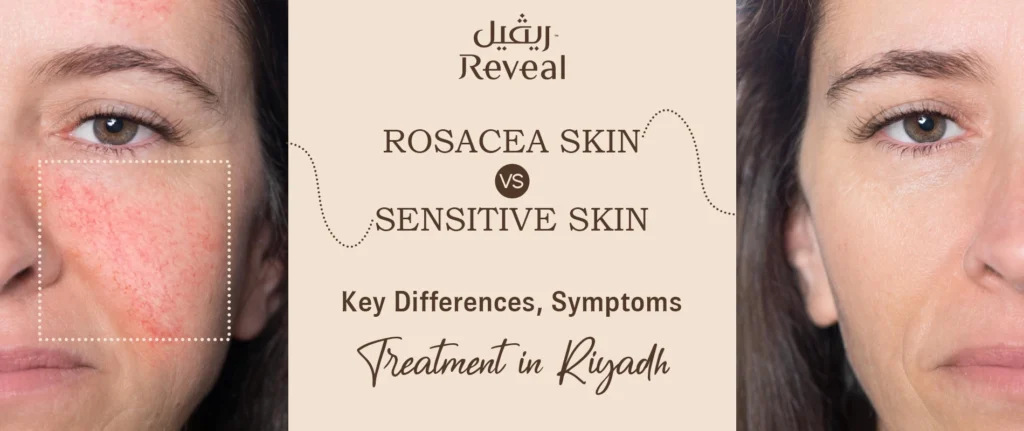
Many people notice facial redness, burning, or irritation and assume they simply have sensitive skin. While that can be true, these symptoms may also indicate rosacea, a common chronic inflammatory skin condition. Because both conditions share similar signs, they are often confused, leading people to use the wrong skincare products or delay appropriate treatment.
The difference between rosacea and sensitive skin is more than skin redness alone. Rosacea causes long-term inflammation that mainly affects the central face, while Sensitive Skin Syndrome (SSS) is usually linked to a compromised skin barrier that reacts easily to environmental factors or skincare products. Although both can cause burning, stinging, and skin sensitivity, the underlying causes and treatment approaches are different.
Getting the correct diagnosis is important because treating the wrong condition can make symptoms worse. Strong exfoliating products may further damage a weakened moisture barrier, while relying only on moisturizers may not control rosacea flare-ups caused by ongoing inflammation. A professional skin evaluation helps identify the cause and guides the most effective treatment plan.
Living in Riyadh also plays a role. The city’s hot weather, intense UV exposure, dry desert climate, and frequent transitions between outdoor heat and air-conditioned spaces can trigger both persistent redness and reactive skin. Without proper protection, these environmental factors may increase irritation and make flare-ups more frequent.
In this guide, you’ll learn the key differences between rosacea and sensitive skin, their symptoms, common triggers, treatment options, and when it’s time to see a dermatologist in Riyadh. We’ll also explain how to protect your skin in Saudi Arabia’s climate and maintain a healthier skin barrier over the long term.
What Is Rosacea?
Rosacea is a chronic inflammatory skin condition that mainly affects the cheeks, nose, chin, and forehead. It usually begins with occasional facial flushing, but over time the redness may become persistent. Unlike temporary irritation, rosacea does not usually disappear on its own and often requires long-term management.
Researchers believe rosacea develops because of a combination of genetics, neurovascular inflammation, immune system changes, and an overactive response within the skin microbiome. These factors make the skin more reactive, causing blood vessels to dilate easily when exposed to triggers such as heat, stress, spicy food, or sunlight.
If left untreated, repeated rosacea flare-ups can become more frequent and may lead to visible blood vessels, chronic redness, and changes in skin texture. According to the American Academy of Dermatology (AAD), early diagnosis and trigger management play an important role in reducing rosacea flare-ups and preventing symptoms from worsening.
What Causes Rosacea?
There is no single cause of rosacea. Instead, it develops through a combination of biological and environmental factors. People with a family history of rosacea are more likely to develop the condition, while sun exposure, emotional stress, hot drinks, spicy food, and extreme temperatures commonly trigger flare-ups.
In Riyadh, the combination of intense sunlight, dry air, and high temperatures can place additional stress on the skin. These conditions may increase facial flushing, worsen skin inflammation, and make existing redness more noticeable throughout the year.
Common Symptoms of Rosacea
The most common symptom of rosacea is persistent facial redness, particularly across the central face. Many people also experience burning, stinging, warmth, or increased skin sensitivity, especially after exposure to common triggers.
As the condition progresses, some patients develop papules, pustules, and visible blood vessels known as telangiectasia. Others may experience ocular rosacea, which causes eye irritation, dryness, redness, or a gritty sensation. Because these symptoms can resemble acne or allergy-related irritation, a professional diagnosis is important.
Types of Rosacea
Dermatologists divide rosacea into four main types, although many patients experience features of more than one subtype.
- Erythematotelangiectatic Rosacea (ETR): Causes persistent redness, frequent flushing, and visible blood vessels.
- Papulopustular Rosacea: Produces acne-like papules and pustules alongside facial redness.
- Phymatous Rosacea: Leads to gradual thickening of the skin, most commonly around the nose.
- Ocular Rosacea: Affects the eyes and may cause dryness, redness, burning, and light sensitivity.
What Is Sensitive Skin?
Unlike rosacea, sensitive skin is not a single disease. It is a condition where the skin reacts more easily to products, environmental changes, or everyday irritants that most people can tolerate. This increased reactivity is often linked to a compromised skin barrier, making the skin less able to protect itself from moisture loss and external triggers.
People with Sensitive Skin Syndrome (SSS) often experience temporary skin irritation, burning, stinging, or sensitive skin redness after using skincare products or being exposed to heat, cold weather, pollution, or harsh ingredients. These reactions usually improve once the trigger is removed and the skin barrier begins to recover.
Although reactive skin can be uncomfortable, it does not always involve the long-term inflammation seen in rosacea. However, when the lipid barrier remains damaged for an extended period, the skin becomes increasingly vulnerable to dryness, irritation, and recurring redness.
What Makes Skin Sensitive?
Healthy skin relies on a strong moisture barrier to lock in hydration and protect against irritants. When this protective layer becomes damaged, the skin loses moisture more easily and reacts more intensely to everyday factors. This process is known as barrier dysfunction, and it is one of the main reasons people develop Sensitive Skin Syndrome.
Several factors can weaken the skin barrier, including excessive exfoliation, harsh cleansers, strong acids, retinoids, fragrances, pollution, and frequent weather changes. Even overusing skincare products can trigger irritation, especially in people who already have naturally reactive skin.
Living in Saudi Arabia presents additional challenges. Constant exposure to dry air, high temperatures, UV rays, and indoor air conditioning can gradually reduce skin hydration, making redness and irritation more noticeable throughout the year.
Common Symptoms of Sensitive Skin
The symptoms of sensitive skin often appear shortly after exposure to a trigger. Many people notice temporary redness, burning, tingling, itching, or a feeling of tightness after applying certain skincare products or spending time in extreme weather. Unlike rosacea, these symptoms usually improve once the irritation settles.
Dryness and flaking are also common because a damaged skin barrier struggles to retain moisture. In many cases, the skin feels rough, uncomfortable, and more reactive than usual, particularly after cleansing or exfoliation.
People with rosacea and dry skin may also experience similar discomfort, which is why distinguishing between these conditions is important. While both can cause redness and sensitive skin, rosacea is driven by chronic inflammation, whereas sensitive skin is primarily caused by barrier dysfunction.
Is Sensitive Skin a Medical Condition?
Unlike rosacea, Sensitive Skin Syndrome is not considered a chronic inflammatory disease. Instead, it describes a skin type or condition where the epidermis reacts more easily to external triggers. Some people naturally have more sensitive skin, while others develop it after damaging their stratum corneum through excessive skincare or environmental exposure.
Sensitive skin can also occur alongside conditions such as eczema, contact dermatitis, or rosacea. This is why a professional skin condition assessment is often recommended when redness becomes persistent or difficult to control.
Rosacea vs Sensitive Skin: Key Differences
Because both conditions can cause facial redness, burning, and irritation, many people struggle to tell them apart. However, understanding the difference between rosacea and sensitive skin is essential because each condition requires a different treatment strategy. Rosacea focuses on reducing chronic inflammation, while sensitive skin treatment aims to repair and strengthen the skin barrier.
One of the easiest ways to distinguish the two is by observing how long the redness lasts and what triggers it. Rosacea often causes persistent redness that gradually worsens over time, while sensitive skin redness is usually temporary and improves once the irritant is removed.
Rosacea vs Sensitive Skin
| Feature | Rosacea | Sensitive Skin |
|---|---|---|
Condition |
Chronic inflammatory skin condition |
Reactive skin caused by barrier dysfunction |
Redness |
Persistent facial redness |
Temporary redness |
Main Cause |
Neurovascular inflammation and immune changes |
Compromised skin barrier |
Blood Vessels |
Common visible blood vessels (telangiectasia) |
Advanced baldness |
Acne-like Bumps |
Papules and pustules may develop |
Rare |
Burning & Stinging |
Very common |
Common after triggers |
Duration |
Long-term condition |
Usually improves after trigger removal |
Main Treatment |
Prescription medication, laser treatment, IPL therapy, trigger management |
Barrier repair, gentle skincare, hydration |
Symptoms Comparison
People with rosacea usually develop persistent redness, repeated facial flushing, warmth, and visible blood vessels across the cheeks, nose, and forehead. Some also experience acne-like bumps and long-term skin inflammation that continues even when no obvious trigger is present.
In contrast, sensitive skin is more likely to cause burning, stinging, itching, dryness, and irritation immediately after exposure to products or environmental factors. Once the trigger is removed, the skin often begins to recover without leaving permanent redness.
Appearance of Redness
The redness caused by rosacea is generally concentrated on the central face and may remain visible throughout the day. During a rosacea flare, the skin often appears warm and flushed, while enlarged blood vessels become increasingly noticeable over time.
With sensitive skin, redness tends to appear suddenly after contact with a trigger and fades more quickly. It is also less likely to be accompanied by broken capillaries or long-term inflammation.
Duration of Symptoms
One of the biggest differences is how long symptoms last. Rosacea flare-ups may continue for days or even weeks, and repeated episodes can eventually lead to chronic redness if left untreated.
Sensitive skin reactions are usually shorter. Once the irritating product is discontinued or the skin barrier begins to heal, redness and discomfort often improve within hours or a few days.
Common Triggers
Although both conditions share several triggers, the body’s response is different. Heat, sun exposure, emotional stress, spicy food, alcohol, hot drinks, and exercise commonly trigger rosacea because they increase blood flow and worsen inflammation.
Sensitive skin is more commonly irritated by fragrance, harsh cleansers, acids, retinoids, over-exfoliation, preservatives, detergents, and sudden weather changes. These factors damage the lipid barrier, making the skin more reactive.
Long-Term Skin Changes
Without treatment, rosacea may lead to permanent visible blood vessels, thicker skin, and ongoing facial redness. Some patients also develop ocular rosacea, affecting the eyes and eyelids.
Sensitive skin rarely causes permanent structural changes. However, repeated irritation can keep the skin barrier weak, resulting in ongoing dryness, skin discomfort, and increased sensitivity until proper barrier repair is achieved.
Common Triggers
Although both conditions share several triggers, the body’s response is different. Heat, sun exposure, emotional stress, spicy food, alcohol, hot drinks, and exercise commonly trigger rosacea because they increase blood flow and worsen inflammation.
Sensitive skin is more commonly irritated by fragrance, harsh cleansers, acids, retinoids, over-exfoliation, preservatives, detergents, and sudden weather changes. These factors damage the lipid barrier, making the skin more reactive.
Long-Term Skin Changes
Without treatment, rosacea may lead to permanent visible blood vessels, thicker skin, and ongoing facial redness. Some patients also develop ocular rosacea, affecting the eyes and eyelids.
Sensitive skin rarely causes permanent structural changes. However, repeated irritation can keep the skin barrier weak, resulting in ongoing dryness, skin discomfort, and increased sensitivity until proper barrier repair is achieved.
How to Tell Whether You Have Rosacea or Sensitive Skin
It can be difficult to tell whether your redness is caused by rosacea or Sensitive Skin Syndrome (SSS) because both conditions share similar symptoms. However, paying attention to how your skin reacts, how long the redness lasts, and what triggers it can provide valuable clues. While this information can help you understand your symptoms, a professional rosacea diagnosis from a dermatologist in Riyadh is the most reliable way to identify the condition.
Signs That Suggest Rosacea
If your facial redness appears frequently and gradually becomes permanent, rosacea may be the cause. The condition usually affects the cheeks, nose, chin, and forehead, creating a pattern of persistent facial redness across the central face. Many people also notice their skin feels warm or flushed even without an obvious trigger.
Another common sign is the appearance of visible blood vessels, also known as telangiectasia or thread veins. Some people develop acne-like papules and pustules, while others experience burning or stinging during a rosacea flare-up. Even slight rosacea should not be ignored, as early treatment can help slow its progression and reduce long-term skin changes.
Signs That Suggest Sensitive Skin
People with sensitive skin usually react soon after using a new skincare product or being exposed to environmental changes. The redness is often temporary and may be accompanied by burning, itching, tingling, or a feeling of tightness. Once the trigger is removed, the skin gradually returns to normal.
A weakened skin barrier is another common feature. If your skin frequently becomes dry, flaky, or irritated after cleansing or exfoliating, you may have Sensitive Skin Syndrome rather than rosacea. Str
Can You Have Both Conditions?
Yes. It is possible to have both rosacea and sensitive skin at the same time. In fact, many people with rosacea also have a compromised skin barrier, making their skin more reactive to everyday products and environmental factors. This combination often leads to increased redness, dryness, and discomfort.
When both conditions are present, treatment should focus on reducing inflammation while restoring the skin barrier. A personalized treatment plan from a qualified skin specialist in Riyadh can help manage flare-ups without causing additional irritation.
Common Triggers for Rosacea and Sensitive Skin
Although rosacea and sensitive skin respond differently, they often share several everyday triggers. Identifying these triggers is one of the most effective ways to reduce facial redness, prevent flare-ups, and maintain healthier skin over time.
Rosacea Triggers
People with rosacea often notice flare-ups after exposure to factors that increase blood flow or skin inflammation. Common triggers include sun exposure, hot weather, emotional stress, hot drinks, spicy food, alcohol, and intense exercise. These situations can cause the facial blood vessels to expand, resulting in facial flushing and worsening persistent redness.
Not everyone reacts to the same trigger. Keeping a simple diary of daily activities, meals, and skincare products can help identify personal patterns and make trigger management much easier.
Sensitive Skin Triggers
For people with Sensitive Skin Syndrome, irritation is more commonly caused by ingredients that damage the skin barrier. Products containing fragrance, alcohol-based formulas, strong exfoliating acids, harsh cleansers, or excessive retinoids often lead to sensitive skin redness, burning, and dryness.
Environmental factors such as pollution, cold winds, sudden weather changes, and over-exfoliation can also weaken the lipid barrier, leaving the skin more vulnerable to irritation. Choosing fragrance-free products and maintaining good skin hydration can significantly reduce these reactions.
Why Riyadh's Climate Can Make Symptoms Worse
The climate in Riyadh creates unique challenges for people with rosacea and sensitive skin. During much of the year, high temperatures and strong UV exposure increase the risk of facial flushing and prolonged redness. Even short periods in direct sunlight can trigger inflammation in people with redness-prone skin.
Dry desert air also reduces moisture levels in the skin, making barrier dysfunction more common. Frequent exposure to dust storms can further irritate the skin, while moving repeatedly between outdoor heat and heavily air-conditioned buildings may increase dryness and sensitivity.
For these reasons, dermatologists often recommend wearing mineral sunscreen with SPF 50, using a gentle cleanser, and applying a barrier repair cream daily. These simple habits help protect the skin from environmental stress and support long-term skin barrier health, especially in Saudi Arabia’s demanding climate.
Treatment Options for Rosacea and Sensitive Skin in Riyadh
The right treatment depends on identifying the actual cause of your symptoms. While rosacea requires medical management to control inflammation, sensitive skin benefits from repairing the skin barrier and avoiding irritants. Because these conditions can look similar, a professional skin evaluation helps ensure you receive the most effective treatment instead of relying on trial and error.
Medical Treatments for Rosacea
Rosacea cannot be permanently cured, but it can be managed successfully with the right treatment plan. After a thorough clinical diagnosis, a dermatologist in Riyadh may recommend prescription medications, advanced laser procedures, or a combination of therapies depending on the severity of your symptoms.
For mild to moderate rosacea, prescription creams are often the first step. Ingredients such as Azelaic Acid, Metronidazole, and Ivermectin help reduce skin inflammation, calm redness, and control acne-like bumps. Consistent use, combined with proper skincare, often leads to noticeable improvement within a few weeks.
If redness is more severe or accompanied by frequent flare-ups, oral medications may be recommended. These medicines work by reducing inflammation from within and are usually prescribed for a limited period under medical supervision. They are particularly helpful for patients with inflammatory papules and pustules.
For persistent redness and visible blood vessels, advanced energy-based treatments can provide longer-lasting results. At a trusted dermatology clinic in Riyadh, technologies such as Laser Genesis, Excel V+, and M22 IPL are commonly used to target redness, improve skin tone, and reduce broken capillaries. These treatments are selected based on the patient’s skin type, severity of rosacea, and overall treatment goals.
Skincare for Sensitive Skin
Managing Sensitive Skin Syndrome begins with strengthening the compromised skin barrier. A simple skincare routine is often more effective than using multiple active ingredients. Choosing gentle products allows the skin to recover while reducing irritation and sensitive skin redness.
Start with a fragrance-free gentle cleanser that removes impurities without stripping the skin’s natural oils. Follow with a barrier repair moisturizer containing ingredients like Ceramides, Panthenol, Glycerin, or Hyaluronic Acid to restore hydration and support lipid barrier function. These ingredients help improve skin hydration while reducing tightness and discomfort.
Daily sun protection is equally important. A mineral sunscreen with SPF 50, preferably containing Zinc Oxide, helps protect the skin from UV rays without causing unnecessary irritation. This is especially important for people living in Riyadh, where year-round sun exposure can worsen both rosacea and reactive skin.
Daily Skincare Tips for Both Conditions
Whether you have rosacea, sensitive skin, or both, consistency is more important than using a large number of products. A simple routine focused on cleansing, moisturizing, and sun protection helps maintain a healthier skin barrier while reducing future flare-ups.
Avoid over-exfoliating or introducing several new products at once, as this can increase skin sensitivity and trigger redness. Instead, choose dermatologist-recommended products that support barrier repair, reduce inflammation, and protect the skin from environmental damage. Small daily habits often make the biggest difference in achieving calmer, healthier skin over time.
When Should You See a Dermatologist?
Occasional redness after exercise or sun exposure is usually not a cause for concern. However, if your symptoms become frequent, last for several days, or continue despite changing your skincare routine, it is time to seek professional advice. Early treatment can prevent symptoms from becoming more difficult to manage and reduce the risk of long-term skin changes.
Warning Signs You Shouldn't Ignore
Persistent facial redness, recurring burning, visible blood vessels, acne-like bumps, or ongoing eye irritation should never be ignored. These symptoms may indicate rosacea rather than temporary skin sensitivity. If redness continues to spread or becomes more noticeable over time, scheduling a medical assessment is the safest approach.
Similarly, severe dryness, constant irritation, or allergic reactions after using skincare products may point to significant barrier dysfunction or another underlying skin condition. A professional evaluation helps identify the exact cause before symptoms worsen.
How Dermatologists Diagnose Rosacea
There is no single laboratory test for rosacea. Instead, a dermatologist performs a detailed skin examination, reviews your medical history, and evaluates your symptoms, triggers, and skin pattern. This clinical diagnosis helps distinguish rosacea from conditions such as eczema, contact dermatitis, acne, or Sensitive Skin Syndrome.
In some cases, photographs of previous flare-ups or a symptom diary can provide valuable information during the consultation. This allows the dermatologist to develop a treatment plan that is tailored to your skin rather than relying on a one-size-fits-all approach.
Benefits of Early Treatment
Seeking treatment early offers the best chance of controlling symptoms before permanent changes develop. Early intervention can reduce persistent redness, minimize rosacea flare-ups, improve skin barrier health, and lower the likelihood of developing visible blood vessels or thickened skin.
For many patients, combining medical treatment with a gentle skincare routine and proper trigger management provides long-lasting control. Working with an experienced skin specialist in Riyadh also ensures your treatment plan can be adjusted as your skin’s needs change over time.
Can Rosacea Be Mistaken for Other Skin Conditions?
Yes. One of the biggest challenges with rosacea is that it shares symptoms with several other skin conditions. Facial redness, irritation, dryness, and acne-like bumps can occur in different disorders, making self-diagnosis unreliable. A proper skin condition assessment by an experienced dermatologist in Riyadh is the best way to identify the underlying cause and begin the right treatment.
Acne
Rosacea is often mistaken for acne because both conditions can cause papules and pustules. However, acne usually includes blackheads and whiteheads, while rosacea does not. Rosacea also causes persistent facial redness, frequent flushing, and visible blood vessels, which are uncommon in typical acne.
Using strong acne treatments without a professional diagnosis can sometimes worsen rosacea by increasing skin inflammation and weakening the skin barrier. If acne treatments seem to make your redness worse instead of better, it’s worth consulting a dermatologist.
Eczema
Eczema can also resemble rosacea, particularly when the skin becomes red, dry, and itchy. The main difference is that eczema is primarily associated with severe dryness and a damaged skin barrier, while rosacea is driven by chronic inflammation and abnormal blood vessel activity.
People with eczema often develop patches of rough, flaky skin on different parts of the body, whereas rosacea mainly affects the central face. A detailed skin examination helps distinguish between the two conditions and ensures the treatment matches the diagnosis.
Contact Dermatitis
Both allergic contact dermatitis and irritant contact dermatitis can cause redness, burning, and skin irritation after exposure to a particular product or substance. Common triggers include fragrances, preservatives, cosmetics, detergents, and certain skincare ingredients.
Unlike rosacea, contact dermatitis usually improves once the triggering substance is removed. If your symptoms start after introducing a new product and improve when you stop using it, dermatitis may be the more likely cause.
Seborrheic Dermatitis
Seborrheic dermatitis is another condition that can be confused with rosacea because it causes redness around the nose, eyebrows, forehead, and hairline. However, it is usually accompanied by oily scales or flaky skin rather than frequent facial flushing.
Some people may even have both conditions at the same time, making diagnosis more challenging. In these cases, a personalized treatment plan is essential to control inflammation while protecting the skin barrier.
Prevention Tips for Healthy, Calm Skin
Although rosacea and Sensitive Skin Syndrome cannot always be prevented, adopting healthy skincare habits can significantly reduce flare-ups and improve overall skin comfort. Consistency is more effective than using multiple products, especially for redness-prone skin.
Lifestyle Changes
Understanding your personal triggers is one of the most effective ways to keep symptoms under control. If you notice redness after hot drinks, spicy food, emotional stress, or exercise, try to reduce exposure whenever possible. Small lifestyle adjustments often make a noticeable difference in long-term rosacea management.
Managing stress is equally important. Relaxation techniques, quality sleep, and regular hydration can help reduce inflammation and support healthier skin from within.
Sun Protection
Daily sun protection is essential for both rosacea and sensitive skin. Even brief exposure to UV rays can trigger facial flushing and worsen persistent redness, particularly in Riyadh’s hot climate.
Choose a broad-spectrum mineral sunscreen with SPF 50 and reapply it if you spend extended time outdoors. Wearing a wide-brimmed hat and seeking shade during peak sunlight hours can provide additional protection.
Build a Gentle Skincare Routine
A simple routine is usually the best approach for reactive skin. Use a gentle cleanser, apply a hydrating barrier, repair moisturizer, and finish with sunscreen every morning. At night, focus on cleansing and restoring the skin barrier instead of using multiple active ingredients.
Avoid over-exfoliating or switching products too frequently. Giving your skin time to adapt helps strengthen the moisture barrier and reduces unnecessary irritation.
Manage Your Triggers
Every person’s skin responds differently, so keeping track of flare-ups can help identify your individual triggers. Whether it’s a particular skincare ingredient, weather condition, or dietary habit, avoiding known triggers is an important part of long-term trigger management.
If symptoms continue despite following a gentle routine, seeking advice from a qualified skin specialist in Riyadh can help you find a treatment plan tailored to your skin’s needs.
Frequently Asked Questions (FAQ)
How can I tell if I have rosacea or just sensitive skin?
Rosacea usually causes persistent facial redness, flushing, and sometimes visible blood vessels, while sensitive skin reacts temporarily to products or environmental triggers. A dermatologist in Riyadh can confirm the correct diagnosis through a professional skin evaluation.
Does rosacea go away on its own?
No. Rosacea is a chronic inflammatory skin condition that typically requires ongoing management. Early treatment and avoiding triggers can help reduce flare-ups and prevent progression.
Can sensitive skin develop into rosacea?
No, sensitive skin does not turn into rosacea. However, a person can have both conditions at the same time, which is why persistent redness should be evaluated by a dermatologist.
What skincare ingredients should I avoid?
Avoid fragrances, harsh cleansers, alcohol-based products, strong exfoliating acids, and excessive retinoids. Instead, use products that support barrier repair and keep the skin hydrated.
Is laser treatment effective for rosacea?
Yes. Treatments such as Laser Genesis, Excel V+, and M22 IPL can effectively reduce persistent redness and visible blood vessels when recommended by a dermatologist.
Does Riyadh's weather make rosacea worse?
Yes. Riyadh’s hot climate, intense UV exposure, dry air, and dust can trigger rosacea flare-ups and increase skin sensitivity. Daily sun protection and proper skincare are essential.
What is the best sunscreen for rosacea-prone skin?
A broad-spectrum mineral sunscreen with SPF 50, containing Zinc Oxide or Titanium Dioxide, is generally the best option. It protects against UV rays while minimizing irritation.
When should I visit a dermatologist?
See a skin specialist in Riyadh if your redness is persistent, worsens over time, or is accompanied by burning, acne-like bumps, or visible blood vessels. Early diagnosis leads to more effective treatment.
Conclusion
Although rosacea and sensitive skin share many symptoms, they are two distinct conditions that require different approaches to treatment. Rosacea is a chronic inflammatory skin condition that often causes persistent facial redness, flushing, and visible blood vessels, while Sensitive Skin Syndrome is usually linked to a weakened skin barrier that reacts to everyday irritants. Understanding these differences is the first step toward choosing the right skincare routine and avoiding treatments that may worsen your symptoms.
If you’re experiencing ongoing redness, burning, or frequent flare-ups, don’t rely on self-diagnosis alone. A professional skin condition assessment can identify the underlying cause and help you receive the most effective care. Whether you need advanced rosacea treatment in Riyadh, support with barrier repair, or personalized advice for sensitive skin treatment, early intervention can improve both your skin’s appearance and long-term health. With the right guidance and consistent skincare, achieving calmer, healthier skin is an achievable goal.